
Mars Colonization
When Science Wins Over Nature

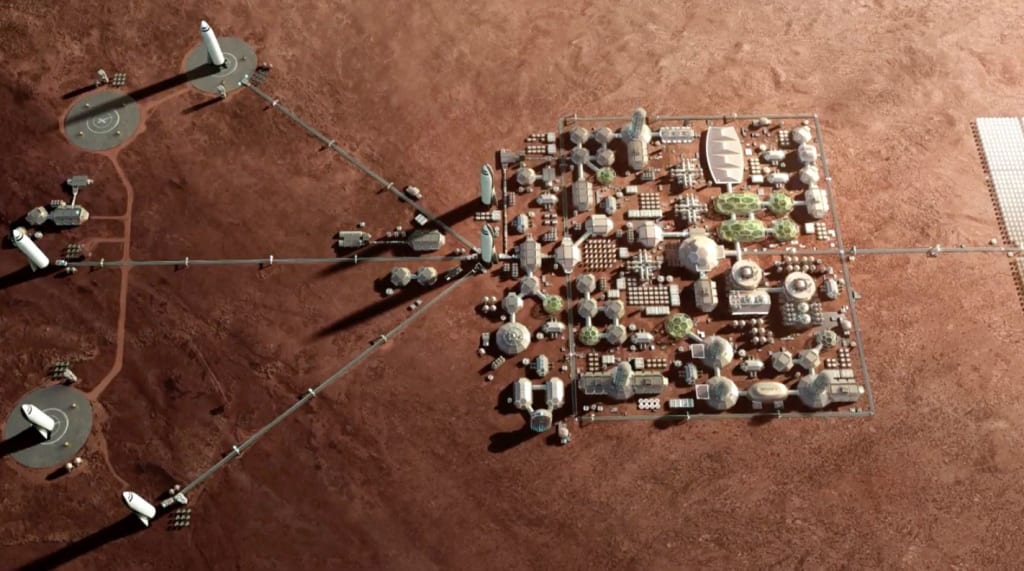
Humanity’s Next Giant Leap - The dream of colonizing Mars has captivated scientists, visionaries, and storytellers for generations. Once considered the realm of science fiction, establishing a human settlement on the Red Planet is now the focus of serious planning, investment, and innovation. With advancements in space travel and a growing urgency to ensure humanity’s long-term survival, Mars colonization is emerging as one of the most ambitious and defining projects of the 21st century.
Why Mars?
Mars is the most Earth-like planet in our solar system. It has a 24.6-hour day, polar ice caps, seasons, and the presence of water in the form of ice. Unlike the Moon, Mars has an atmosphere — thin and mostly carbon dioxide, but still a starting point. While inhospitable by Earth standards, these features make Mars the most viable target for long-term colonization beyond our planet.
The Goals of Mars Colonization
Colonizing Mars isn’t just about exploration — it’s about survival, science, and securing a future for humanity:
1. Ensuring Species Survival: By becoming a multiplanetary species, humanity can reduce the risk of extinction from global catastrophes like nuclear war, pandemics, or asteroid impacts.
2. Scientific Discovery: Mars holds clues to the formation of our solar system and the possibility of past or present life beyond Earth.
3. Technological Advancement: The challenges of Mars colonization are pushing innovations in energy, agriculture, robotics, and more — technologies that may benefit life on Earth.
4. Economic Opportunities: Long-term colonization could open doors to asteroid mining, fuel production, and new industries in space.
The Challenges Ahead
Colonizing Mars comes with enormous challenges — scientific, technological, and ethical:
1. Radiation Exposure: Without a strong magnetic field, Mars exposes humans to harmful cosmic rays. Shielded habitats, underground living, or artificial magnetic fields are potential solutions.
2. Thin Atmosphere and Harsh Climate: The Martian atmosphere is 100 times thinner than Earth’s and composed mostly of carbon dioxide. Temperatures often drop below -60°C (-80°F), requiring specially designed habitats and suits.
3. Limited Resources: Water is scarce, food must be grown locally or imported, and all infrastructure must be built from scratch, ideally using local materials through techniques like 3D printing.
4. Psychological and Social Strain: Long-term isolation, communication delays with Earth (up to 22 minutes one-way), and confined spaces will test the mental health and social dynamics of early settlers.
Who’s Leading the Charge?
Several organizations are racing toward Mars:
1. NASA plans to send astronauts to Mars in the late 2030s, building on experience gained from the Artemis Moon missions.
2. SpaceX, founded by Elon Musk, aims to send humans to Mars in the 2020s using its fully reusable Starship rocket. Musk’s long-term vision is to build a self-sustaining city of a million people.
3. Other players include the European Space Agency (ESA), China’s CNSA, and private companies like Blue Origin and Lockheed Martin, all contributing to Mars-related technology and missions.
What Would Life on Mars Look Like?
Early Mars colonies would likely consist of interconnected modules or domes housing life-support systems, power supplies (solar and nuclear), hydroponic farms, and scientific labs. Settlers would need to wear suits outdoors and adapt to a low-gravity environment (about 38% of Earth’s gravity). Over time, more permanent structures could be built using Martian regolith, and local resources like water ice could support agriculture and fuel production.
Ethical and Philosophical Questions
Colonizing another planet raises profound ethical issues:
1. Should we terraform Mars, potentially destroying any native life?
2. Who gets to decide how Mars is governed and who gets to live there?
3. How do we ensure inclusivity, safety, and sustainability on a new world?
These are questions humanity must grapple with as it moves forward in space exploration.
Mars colonization is no longer a distant fantasy. It’s a massive undertaking that will require global cooperation, scientific breakthroughs, and a bold vision for the future. Whether we succeed in the next few decades or face setbacks along the way, the pursuit of Mars colonization represents one of humanity’s most exciting and transformative endeavors — a step not just toward a new planet, but toward a new chapter in our shared story.
The journey to Mars may be long and uncertain, but one thing is clear: the Red Planet is calling, and we are getting ready to answer.
About the Creator
Keep reading
More stories from Gus Woltmann and writers in Chapters and other communities.
What Professions Will AI Replace?
Artificial intelligence (AI) is reshaping the job landscape in ways once thought possible only in science fiction. From automating repetitive tasks to making complex decisions, AI’s capabilities are growing rapidly — and with them, questions arise: Which professions are most at risk? Which will evolve? And how can workers adapt?
By Gus Woltmann7 days ago in Chapters
Why Didn't Anyone Tell Us
Men, move along. This is not for you. This is for the women. I was forty-five when I began menopause. It is pretty young for that to be going on in a woman’s life, but I had undiagnosed PCOS, my entire life. Thank you to all the gynecologists I had seen my entire life. That in itself should encourage women to keep seeking second opinions, especially when you are not getting correct answers or any at all.
By Alexandra Grant4 days ago in Humans




Comments