
A Green Solution to Urban Pollution
How planting and protecting trees can help cities breathe cleaner air and create healthier communities

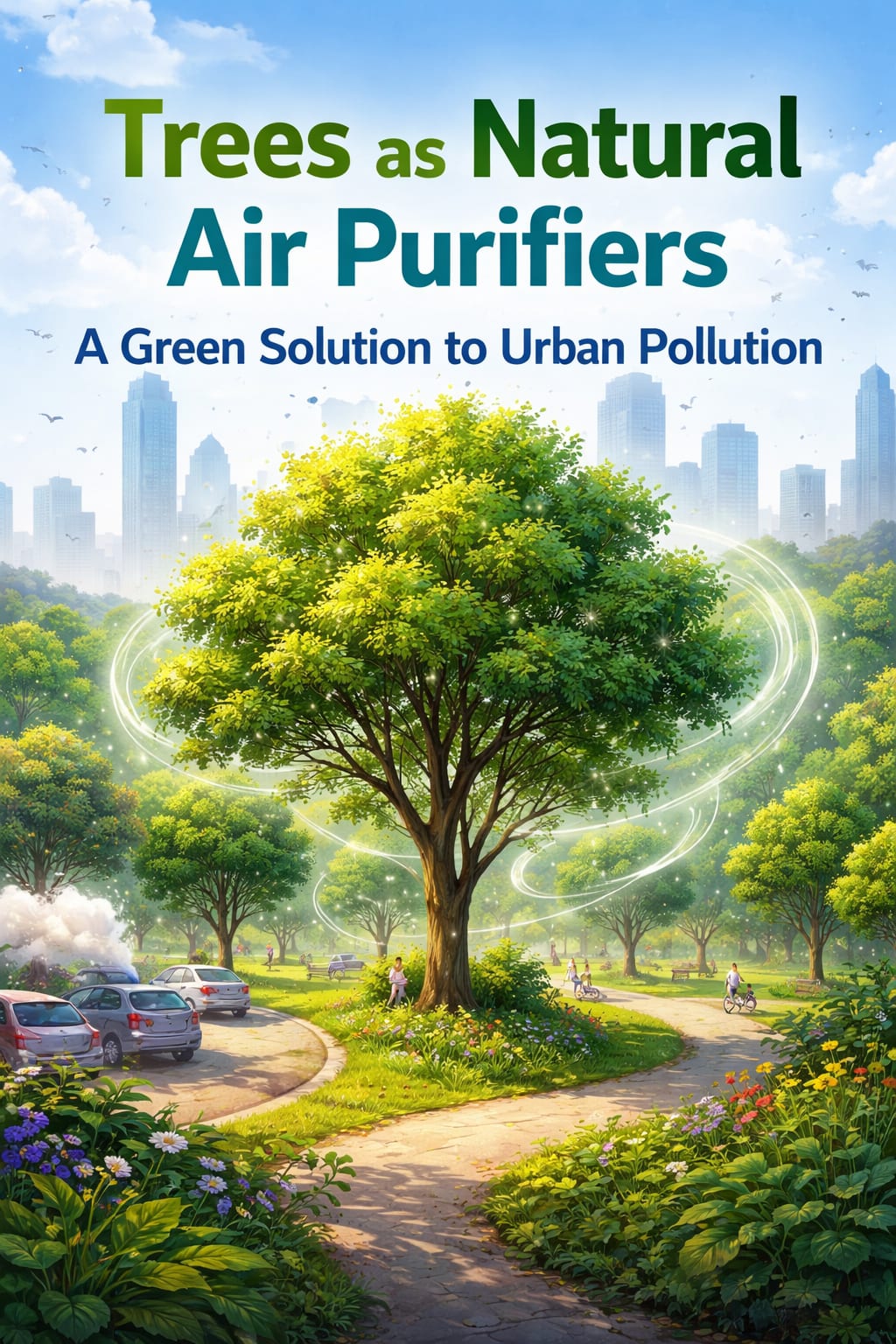
Air pollution has become one of the most serious environmental challenges facing modern cities. Rapid industrialization, increasing vehicle emissions, and expanding urban populations have significantly degraded air quality around the world. Polluted air not only harms ecosystems but also poses severe health risks to humans, contributing to respiratory diseases, heart conditions, and reduced life expectancy. Among the many strategies proposed to combat this problem, planting and preserving trees stands out as one of the most natural, cost-effective, and sustainable solutions.
Trees play a vital role in improving air quality by acting as natural filters. Their leaves, branches, and bark capture airborne pollutants such as dust, smoke, and particulate matter. These tiny particles, often referred to as PM2.5 and PM10, are among the most harmful components of air pollution because they can penetrate deep into the lungs. When trees intercept these particles, they prevent them from remaining suspended in the air we breathe.
Another important way trees reduce air pollution is through the process of photosynthesis. During photosynthesis, trees absorb carbon dioxide (CO₂), a major greenhouse gas produced by vehicles, factories, and other human activities. In exchange, they release oxygen into the atmosphere. This process not only helps clean the air but also contributes to maintaining the balance of gases in the atmosphere. A mature tree can absorb a significant amount of carbon dioxide each year, making forests and urban green spaces powerful tools in combating climate change.
In addition to absorbing carbon dioxide, trees also remove other harmful gases from the air. These include nitrogen dioxide, sulfur dioxide, and ozone, which are common pollutants in urban environments. Through tiny pores on their leaves called stomata, trees absorb these gases and break them down or store them within their tissues. As a result, areas with dense vegetation often experience lower levels of harmful pollutants compared to heavily built-up areas with little greenery.
Urban trees also help reduce pollution indirectly by lowering temperatures in cities. This phenomenon is known as the “urban heat island effect,” where buildings, roads, and other man-made structures absorb and retain heat, causing cities to become warmer than surrounding rural areas. Higher temperatures can accelerate the formation of harmful air pollutants such as ground-level ozone. Trees provide shade and release water vapor through a process called transpiration, which cools the surrounding air. By lowering temperatures, trees help slow down the chemical reactions that produce certain types of pollution.
Furthermore, trees play an important role in controlling dust and soil particles. In dry or windy environments, bare soil can release large amounts of dust into the atmosphere. Tree roots stabilize the soil, while their canopy reduces wind speed, preventing dust from spreading. This is especially beneficial in urban areas located near construction sites or regions prone to dust storms.
The benefits of trees extend beyond environmental improvements. Cleaner air directly contributes to better public health. Studies have shown that neighborhoods with more green spaces often report lower rates of asthma and other respiratory illnesses. Trees also improve mental well-being by providing aesthetically pleasing landscapes, reducing stress, and encouraging outdoor activities. In this way, trees contribute to both physical and psychological health.
However, it is important to recognize that trees alone cannot completely solve the problem of air pollution. Effective pollution control requires a combination of strategies, including reducing vehicle emissions, transitioning to clean energy sources, and implementing strong environmental policies. Trees should therefore be viewed as part of a broader approach to improving environmental quality rather than a single solution.
Urban planning plays a crucial role in maximizing the pollution-reducing benefits of trees. City planners and policymakers must ensure that green spaces are integrated into urban development projects. Planting trees along roadsides, in parks, and around residential areas can significantly improve air quality. Selecting appropriate species is also important, as some trees are more effective at capturing pollutants and adapting to urban conditions.
Community involvement is another key factor in successful tree-planting initiatives. Local residents, schools, and environmental organizations can participate in planting and maintaining trees in their neighborhoods. Such efforts not only increase green cover but also raise public awareness about environmental protection.
In conclusion, trees are powerful allies in the fight against air pollution. By filtering harmful particles, absorbing greenhouse gases, cooling urban environments, and stabilizing soil, they play a multifaceted role in improving air quality. While they cannot eliminate pollution entirely, their presence significantly reduces its impact and enhances the overall health of urban environments. Protecting existing forests and planting new trees is therefore a simple yet highly effective step toward creating cleaner, healthier, and more sustainable cities for future generations. 🌳🌍
About the Creator
Irshad Abbasi
Ali ibn Abi Talib (RA) said 📚
“Knowledge is better than wealth, because knowledge protects you, while you have to protect wealth.
Keep reading
More stories from Irshad Abbasi and writers in Earth and other communities.
Asia’s Second-Best Island in DestinAsian Ranking
Vietnam’s largest island, Phu Quoc, has achieved a remarkable milestone in global tourism by being ranked the second-best island in Asia in the prestigious DestinAsian Readers’ Choice Awards 2026, surpassing the world-famous Maldives. The recognition marks a major moment for Vietnam’s tourism industry and highlights the island’s rapid rise as one of the most desirable tropical destinations in the world. 
By Irshad Abbasi 2 days ago in Earth
Watering Wisely: Techniques for Deep Roots and Drought Tolerance
But beneath the surface, that shallow sprinkle is doing more harm than good. It encourages shallow roots that stay near the surface, dependent on your daily attention. When you forget to water—or when vacation or life intervenes—those shallow roots have no way to reach deeper moisture. Your plants wilt, stress, and sometimes die.
By Emma Wallace4 days ago in Earth
TUS NUA - ch 53
TUS NUA – ch 53 New Beginnings – Mia and Midnight (*)(*)(*) Finola knew Ali’s brother-in-law needed to put his mind at rest. She fed her arm through his and led him outside. “We’ll sit here. If you like, I can put a block around us so our conversation will be private.”
By Margaret Brennan6 days ago in Fiction



Comments
There are no comments for this story
Be the first to respond and start the conversation.