
Why a Real Zombie Apocalypse Would Probably Fail
5 Science-Backed Reasons the Undead Wouldn’t Stand a Chance (Yes, Even in 2026)

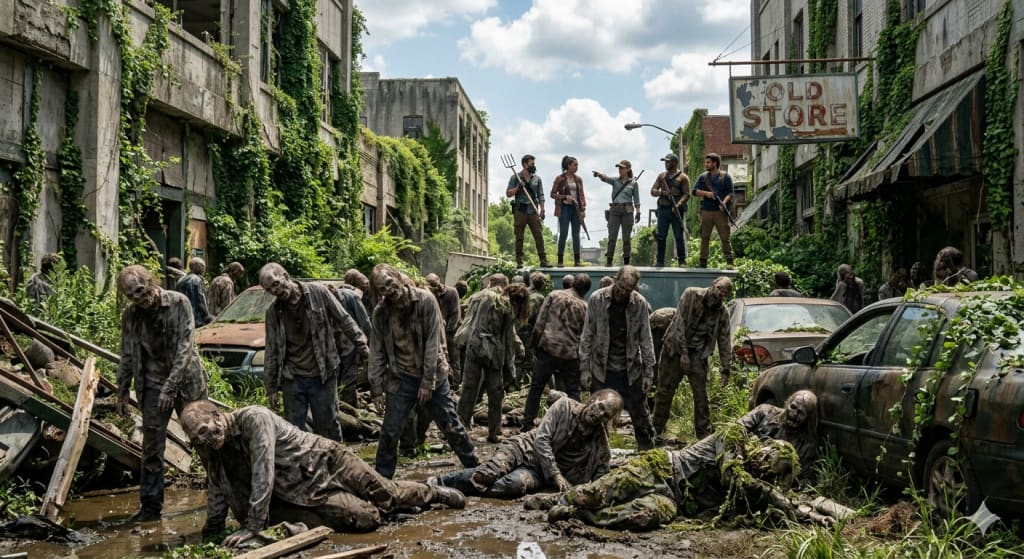
They’re the living dead.
Our nightmares wrapped in rotting flesh.
Brain-hungry monsters that shuffle through our favorite shows and movies like they own the place.
From blockbuster films to binge-worthy series like The Walking Dead and intense thrillers like World War Z, zombies have taken over pop culture. We love imagining civilization collapsing under the weight of a mindless horde.
But here’s the twist no one talks about enough:
A real zombie apocalypse?
It probably wouldn’t last very long.
Let’s break down five realistic reasons why the undead wouldn’t stand a chance in the real world.
5. Decomposition: Zombies Would Literally Fall Apart
Let’s start with the obvious.
Zombies are dead bodies. And dead bodies decay.
In reality, decomposition begins almost immediately after death. Within days, tissues break down. Within weeks, serious structural damage occurs. Within months? You’re looking at massive deterioration.
Even if we imagine some mysterious pathogen reanimating corpses, biology still applies:
- Muscles break down.
- Tendons weaken.
- Skin splits.
- Limbs lose integrity.
Motor function would be one of the first things to fail. A creature depending on rotting tissue to move isn’t chasing anyone for long.
Give it a few weeks of decay, and most zombies wouldn’t be sprinting; they’d be collapsing.
Unpleasant? Sure.
Apocalyptic? Not really.
4. Modern Disease Control Is No Joke
Let’s give science some credit.
We live in a world that has:
- Eradicated smallpox.
- Controlled rabies in many developed nations.
- Contained global outbreaks through coordinated response systems.
Organizations like the Centers for Disease Control and Prevention and the World Health Organization specialize in identifying, isolating, and containing infectious diseases.
And how do most fictional zombie viruses spread?
Through bites.
That’s not airborne.
That’s not magically contagious.
That’s close-contact transmission.
We already understand:
- Quarantines
- Protective gear
- Isolation protocols
- Infection tracing
If humanity can handle global pandemics with microscopic viruses, we can handle a slow-moving corpse that needs to bite you to infect you.
Honestly, you’d have to make some pretty bad life choices to get chomped.
3. Climate and Nature Would Destroy Them
Here’s something horror movies rarely emphasize: weather exists.
Extreme heat?
Extreme cold?
Heavy rain?
Drought?
A healthy human struggles in harsh environments. Now imagine a rotting body exposed to:
- Blazing summer sun
- Sub-zero temperatures
- Flooding
- Sandstorms
Under intense heat, tissue would dry out and crack.
In freezing conditions, limbs would stiffen and snap.
In wet climates, decay would accelerate dramatically.
And let’s not forget wildlife.
In regions like Colorado, mountain lions and scavengers wouldn’t hesitate to tear into a stumbling corpse. In jungle environments across Asia, elephants, big cats, and even opportunistic predators would dismantle undead intruders quickly.
Nature doesn’t care if you’re alive or dead.
If you’re weak, you’re gone.
2. Hollywood Accidentally Trained Us
Ironically, pop culture may have prepared us better than we think.
Movies and shows have drilled survival tactics into our heads for years:
- Aim for the head.
- Avoid bites.
- Secure food and water.
- Fortify buildings.
- Stay mobile.
We’ve seen every scenario imaginable, from mall fortresses to rural safe houses.
Are shopping malls really ideal strongholds? Maybe not.
But the point is: we wouldn’t be clueless.
Unlike medieval populations facing unknown plagues, we’ve already gamed out the zombie scenario thousands of times in fiction.
And preparation, even fictional preparation, builds awareness.
1. Military Might Would End It Fast
Let’s be realistic.
Modern militaries are not fighting with pitchforks and torches.
They have:
- Armored vehicles
- Drones
- Air support
- Heavy artillery
- Tactical response units
Protective military gear can withstand high-caliber impacts. A zombie bite wouldn’t penetrate advanced combat armor.
And here’s the real kicker:
Zombies don’t strategize.
They don’t use weapons.
They don’t coordinate tactics.
A slow, decaying, unarmed force against modern defense systems?
That’s not an apocalypse.
That’s a cleanup operation.
If necessary, drones alone could neutralize concentrated hordes without direct contact.
So… Should We Stop Worrying?
Zombies are terrifying because they tap into deep fears:
- Loss of identity
- Collapse of civilization
- Disease
- Death
But scientifically speaking? The odds of a sustained zombie apocalypse are extremely low.
Between decomposition, climate, wildlife, medical science, and military response, the undead wouldn’t dominate the planet.
They’d decompose on it.
Final Thoughts
We love zombie stories because they force us to imagine who we’d be when everything falls apart.
But if we’re talking about real-world biology and logistics?
The apocalypse would probably be over before it even trended on social media.
So go ahead.
Enjoy the horror movies.
Binge the survival shows.
Just sleep a little easier tonight knowing that science is on your side.
.
.
.
.
.
.
.
.
.
.
Zombie apocalypse explained: Could a zombie outbreak happen in real life? Scientific reasons zombies aren’t possible. How long would zombies survive? Zombie virus realism: Would the military stop zombies? Zombie survival facts.
About the Creator
Areeba Umair
Writing stories that blend fiction and history, exploring the past with a touch of imagination.
Keep reading
More stories from Areeba Umair and writers in Fiction and other communities.
Would You Swap Your Body? The Wildly Real Attempt at the First Human Head Transplant
Imagine this: you're in a devastating accident, or maybe you’re living with a condition that slowly traps you inside your own body. Suddenly, doctors tell you there’s one bold, almost unbelievable option left: they can remove your head and attach it to a completely new body.
By Areeba Umair3 months ago in Fiction


Comments
There are no comments for this story
Be the first to respond and start the conversation.