pop culture
Modern popular culture topics in the geek sphere.
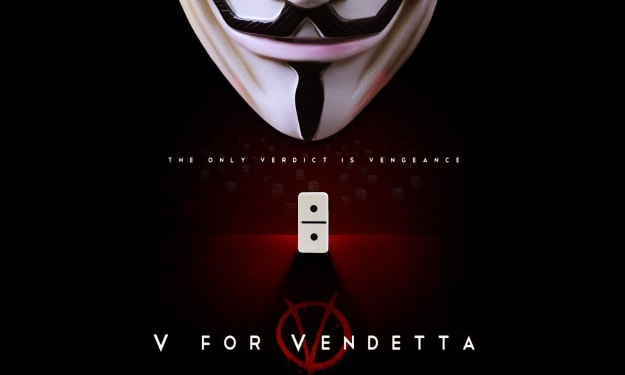
Why V for Vendetta is Scarily Relevant Today . Content Warning.
Plot Summary In a dystopian Britain ruled by a dictatorial government, fear and oppression dominate everyday life. A masked vigilante known as V wages a campaign against the corrupt regime, targeting its leaders and symbols of totalitarianism. He rescues a young woman named Evey Hammond, exposing her to the brutal realities of tyranny and the importance of freedom. Inspired, Evey joins V's struggle, confronting her own fears and morality. Together, they defy the regime, igniting a resistance movement. Through V's rebellion, Evey learns courage and the transformative power of resistance.
By TheScreenAnalystabout 4 hours ago in Geeks
“Iran Claims Benjamin Netanyahu Is Dead, Accuses Israel of Using AI Double”
Introduction Recent claims circulating in regional media and on social platforms have sparked intense debate across the world. According to statements attributed to officials and commentators in Iran, Israeli Prime Minister Benjamin Netanyahu is allegedly already dead. These claims go further, accusing Israel of using advanced artificial intelligence to create a digital or manipulated version of Netanyahu that continues to appear in public. While the accusation has generated widespread attention, there is currently no credible evidence to support it.
By shaoor afridiabout 4 hours ago in Geeks
How 'A Knight of the Seven Kingdoms' Proves Daenerys' Plan To Retake Westeros Was Never Going To Go As Well As She Thought
Nearly seven years after it aired, the eighth and final season of the phenomenon that was Game of Thrones is still remembered for one of the most divisive TV series endings of all time. Much of the controversy stems from fans believing the ending was too rushed, particularly the scenes in which Queen Daenerys Targaryen, seemingly depicted as a hero for most of the series, succumbs to Targaryen madness and burns many of the innocent commoners of King's Landing in her bid to seize the Iron Throne.
By Kristy Andersonabout 7 hours ago in Geeks
Pritzker Prize 2026: Chile’s Smiljan Radić Wins ‘Nobel’ of Architecture. AI-Generated.
The 2026 Pritzker Architecture Prize—commonly known as the “Nobel Prize of architecture”—has been awarded to Smiljan Radić Clarke, a Santiago‑based visionary whose quietly radical approach to design has garnered global admiration. Radić’s recognition marks a notable moment in contemporary architecture, drawing attention not only to his deeply personal work but also to how architectural expression can engage with culture, materiality, and human experience in profound ways. Founded in 1979 by the Pritzker family and sponsored by the Hyatt Foundation, the Pritzker Architecture Prize annually honors a living architect whose built work demonstrates a combination of talent, vision, and commitment that has contributed significantly to humanity and the built environment. It is widely regarded as the highest accolade in the field, accompanied by a US $100,000 grant, a citation, and a bronze medallion. A Career of Quiet Depth and Material Sensitivity Born in Santiago in 1965, Radić studied at the Pontifical Catholic University of Chile and later at the IUAV University in Venice. He founded his own practice, Smiljan Radić Clarke, in 1995, dedicating his career to exploring how architecture can transcend conventional form and instead become an experiential engagement with space, materials, and context. His approach is not rooted in superficial signatures or stylistic bravado but in a deeply reflective process that values atmosphere, perception, and the poetics of human experience. Over decades, Radić’s work has gained international attention for its capacity to blur boundaries between architecture, poetry, and landscape. One of his most celebrated projects is the Serpentine Gallery Pavilion (2014) in London, a delicate exercise in material and spatial ambiguity that invited visitors to experience architecture as a sequence of sensations rather than a fixed form. His built work often appears elemental and serene, seemingly resisting easy interpretation. Instead of declaring architectural authority, Radić’s buildings—both small and monumental—engage visitors through subtle shifts in light, texture, and proportion, encouraging reflection and sensory immersion. What Sets Radić Apart According to commentary from architectural critics following the award announcement, Radić’s designs embody a kind of architectural introspection that distinguishes him from many peers. In a profession that sometimes prioritizes spectacle or technical bravado, his work embraces fragility, ambiguity, and the poetic potential of space. Observers note that this quiet radicalism challenges assumptions about architectural expression while reinforcing the medium’s capacity to shape emotional and sensory experience. Radić becomes the second Chilean architect to receive the Pritzker Prize, following Alejandro Aravena, who won in 2016. Aravena’s work was widely celebrated for its socially conscious approach to housing and community design; Radić’s recognition highlights a different lineage of architectural thought—one rooted in phenomenology, material inquiry, and an almost philosophical engagement with place and presence. The Jury’s Rationale The Prize jury cited Radić’s body of work as emphasizing “architecture as a lived, sensorial experience.” Rather than imposing grand narratives or dominating the landscape, his buildings invite occupants to enter spaces that feel suspended in time—neither completely resolved nor entirely fixed—reflecting a belief that architecture can mirror the complexity and richness of human existence. This focus on the experiential over the declarative positions Radić’s work as uniquely attuned to contemporary architectural discourse. Reception and Influence Radić’s win has been celebrated within the architectural community as a recognition of innovative thinking that expands the boundaries of what architecture can be. Unlike designers who foreground bold formal gestures, his work subtly integrates cultural memory, material memory, and contextual sensitivity, offering a counterpoint to trends that prioritize surface spectacle or overly rationalized programs. His buildings address a wide spectrum of scales—from intimate residential work to public pavilions—yet they consistently reflect a commitment to crafting environments that foster reflection and emotional response. Critics have praised this depth of inquiry, suggesting that Radić’s architecture reminds the profession of its capacity to engage with human vulnerability and environmental context in meaningful ways. Looking Ahead As Radić prepares to receive the 2026 Pritzker Prize at an upcoming international ceremony, his recognition reinforces the enduring relevance of architecture that prioritizes human experience, cultural memory, and spatial poetry. For students, practitioners, and observers of the built environment, his work offers an inspiring example of how architecture can be both contemplative and transformative—capable of shaping not just cities, but how individuals perceive, inhabit, and emotionally connect with space. Smiljan Radić Clarke’s achievement underscores a broader truth: that architecture’s highest honors are not merely bestowed for iconic forms or technological mastery, but for work that resonates with human depth and reimagines how we live within the world.
By Fiaz Ahmed a day ago in Geeks
Six 100-Word Movie Reviews
"The Burbs" (2026), Creator: Celeste Hughey, Actors: Keke Palmer, Jack Whitehall Somehow, I got through this series. I was expecting something different. “The Burbs” takes a psychological thriller approach until it becomes a soap opera, where all the characters talk about random things. I am a Keke Palmer fan, but she felt so misplaced. Credits also include Jack Whitehall, Julia Duffy, Paula Pell, Mark Proksch, and Kapil Talwalker. The actors look like they’re having a fun time working with each other in scenes, but the dialogue and the storyline are so forced. The writing isn’t so good, and the actors try their best. It has to end with a cliffhanger ending.
By Marielle Sabbaga day ago in Geeks
The Worst Friends in Pop Culture
Friendship is one of the most celebrated themes in storytelling. From animated sitcoms to epic fantasy sagas, audiences are constantly reminded that loyalty, trust, and emotional support are the glue that holds relationships together. The best fictional friendships inspire us because they show characters standing by each other through chaos, heartbreak, and adventure.
By Jenna Deedya day ago in Geeks
Series To Watch
I am certainly no stranger to a tv series and everybody knows that in my life. The amount of time I have spent in my existence watching shows on the television or my computer is honestly embarrassing considering I'm not getting paid for it. Maybe someone should be paying me for it. However, it does mean I get to share it with you, dear people. I will do a list order first, don't worry.
By Lyvia Jacka day ago in Geeks
The Hidden Philosophy of FAR: Regina Spektor's Most Underrated Album Explained
Most pop albums are about love or heartbreak. Regina Spektor's Far is about something stranger: what it feels like to be human inside systems that quietly turn people into machines.
By ANTICHRIST SUPERSTAR2 days ago in Geeks