
Peter the Great and His Strange Dental Hobby – When the Russian Tsar Pulled Teeth Himself
Fascinated by medicine and dentistry, Peter the Great sometimes carried dental tools and personally pulled the teeth of courtiers, creating one of the most unusual habits ever recorded for a powerful ruler

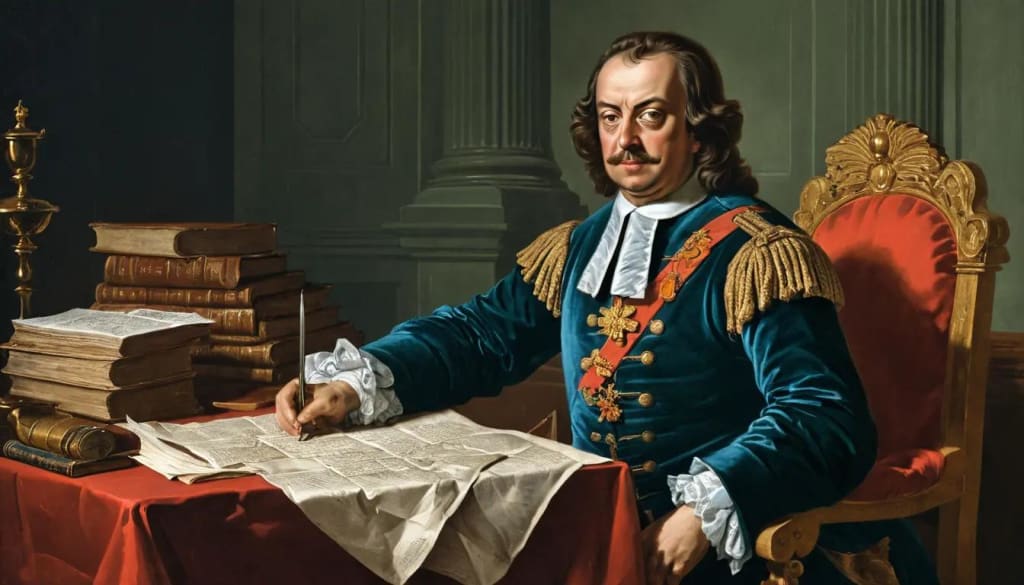
History remembers Peter the Great as one of the most powerful and transformative rulers in Russian history. As tsar of Russia in the late seventeenth and early eighteenth centuries, he reshaped the country politically, militarily, and culturally. Determined to modernize Russia and strengthen its position among European powers, Peter introduced sweeping reforms that changed the structure of government, the army, industry, and even social customs.
Yet behind his image as a formidable ruler stood a man with an astonishing range of personal interests and unusual hobbies. Among the strangest of these was his fascination with dentistry. Unlike most monarchs, who devoted their attention mainly to politics and war, Peter developed a deep curiosity about medical procedures, including the removal of teeth.
This interest was not merely theoretical. Historical accounts suggest that Peter sometimes carried dental instruments with him and personally extracted teeth from people around him, including members of his court.
For those who served in the Russian imperial court, this unusual hobby could be both surprising and slightly terrifying.
Peter the Great possessed a powerful personality and a restless curiosity about the practical skills of many professions. He believed that a ruler should understand not only political theory but also the technical knowledge behind crafts, trades, and sciences. Throughout his life he studied shipbuilding, engineering, navigation, and various mechanical skills.
This curiosity reached an extraordinary level during his famous travels across Europe, where he observed Western technologies and industries in detail. Instead of behaving like a distant monarch, Peter often worked alongside craftsmen to learn their techniques firsthand.
In this context, his interest in dentistry becomes somewhat easier to understand. Dentistry in the early eighteenth century was still a relatively primitive field. Professional dentists existed, but many dental procedures were performed by surgeons, barbers, or other practitioners who specialized in extractions.
To Peter, dentistry represented another practical skill worth understanding.
At some point he began collecting dental instruments and studying how teeth were removed. The tsar reportedly practiced the procedure on volunteers or unfortunate members of his court who complained of toothaches.
The idea of a powerful emperor performing dental surgery may seem shocking today, but in Peter’s time it reflected his unusual approach to learning. He believed that knowledge should be gained through direct experience.
Witnesses recorded that Peter sometimes insisted on performing extractions himself. Courtiers suffering from dental pain might find themselves summoned to the tsar’s presence, where he would examine the problem and prepare his instruments.
In some cases the patient likely welcomed the treatment, since dental pain in that era could be severe and effective remedies were limited. But there are also stories suggesting that Peter occasionally removed teeth even when the medical need was questionable.
This aspect of his hobby has become one of the most curious anecdotes about his life. Historians have reported that Peter kept a collection of teeth he had extracted, preserving them as a strange reminder of his dental experiments.
Today some of these teeth are believed to be preserved in Russian museums, offering a bizarre glimpse into the tsar’s unusual pastime.
The image of a towering emperor calmly pulling teeth from nervous courtiers might sound almost unbelievable, yet it reflects the intense and unpredictable personality of Peter the Great.
He was known for his immense physical energy, his direct manner of speaking, and his willingness to break traditional royal conventions. Unlike many rulers who surrounded themselves with elaborate court rituals, Peter often preferred practical activity and direct involvement.
This attitude extended to many aspects of Russian society. He reorganized the army, built a powerful navy, and founded new cities such as Saint Petersburg. He also introduced reforms designed to modernize Russian culture, including changes to clothing styles and administrative structures.
Such dramatic reforms sometimes required forceful leadership, and Peter was not known for gentle persuasion. His determination to transform Russia could be both inspiring and intimidating to those around him.
The dental hobby fits into this broader pattern of curiosity mixed with authority. When Peter became interested in a subject, he often pursued it enthusiastically, sometimes ignoring the social boundaries that might have discouraged others.
For members of the court, refusing the tsar’s request could be difficult. If Peter wanted to demonstrate his dental skills, few people would dare to decline the opportunity.
Despite the unusual nature of this hobby, it also reveals an intellectual aspect of Peter’s character. He believed that rulers should understand the practical workings of society rather than remain isolated from them. By studying crafts and professions directly, he hoped to improve Russian industry and education.
His fascination with dentistry may therefore be seen as part of a broader curiosity about science and medicine.
Nevertheless, the stories about Peter pulling teeth remain among the most memorable anecdotes from his reign. They illustrate how history’s most powerful figures sometimes possessed personal interests that were unexpected or even bizarre.
The idea of a monarch who personally performs dental extractions is certainly unusual, yet it perfectly reflects the energetic and unconventional personality of Peter the Great.
Today historians continue to study his reforms, military campaigns, and political achievements. Yet the strange tale of the tsar with dental instruments in his hands adds a human dimension to his legacy.
It reminds us that behind the grand events of history stand individuals with their own peculiar habits, curiosities, and passions.
In the case of Peter the Great, that curiosity sometimes led him to explore the mysteries of dentistry personally, turning the imperial court into an unlikely stage for one of the most unusual hobbies ever practiced by a ruler.
About the Creator
Algieba
Curious observer of the world, exploring the latest ideas, trends, and stories that shape our lives. A thoughtful writer who seeks to make sense of complex topics and share insights that inform, inspire, and engage readers.
Ancient Egyptian Tomb Unearthed: 3,000-Year-Old Remains of Four Children Discovered
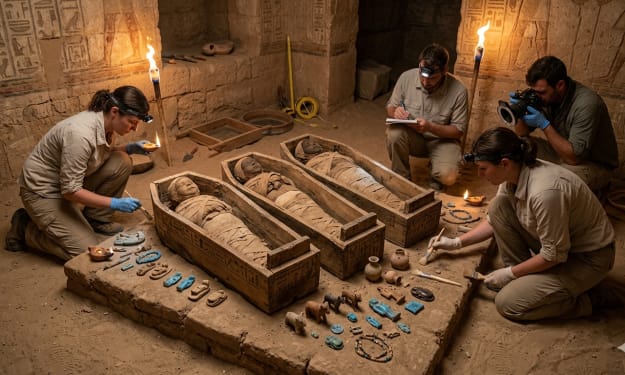
In a remarkable archaeological discovery in Egypt, researchers have uncovered the mummified remains of four children dating back nearly 3,000 years. The find, located in the southern region of Luxor, offers a rare glimpse into the lives, deaths, and funerary customs of young Egyptians during the New Kingdom period.
By Irshad Abbasi 3 days ago in History



Comments
There are no comments for this story
Be the first to respond and start the conversation.