
The Ottoman Cannon: How a Single Weapon Turned an Empire into a Superpower
Tracing the Rise and Fall of Ottoman Military Might Through Its Revolutionary Artillery

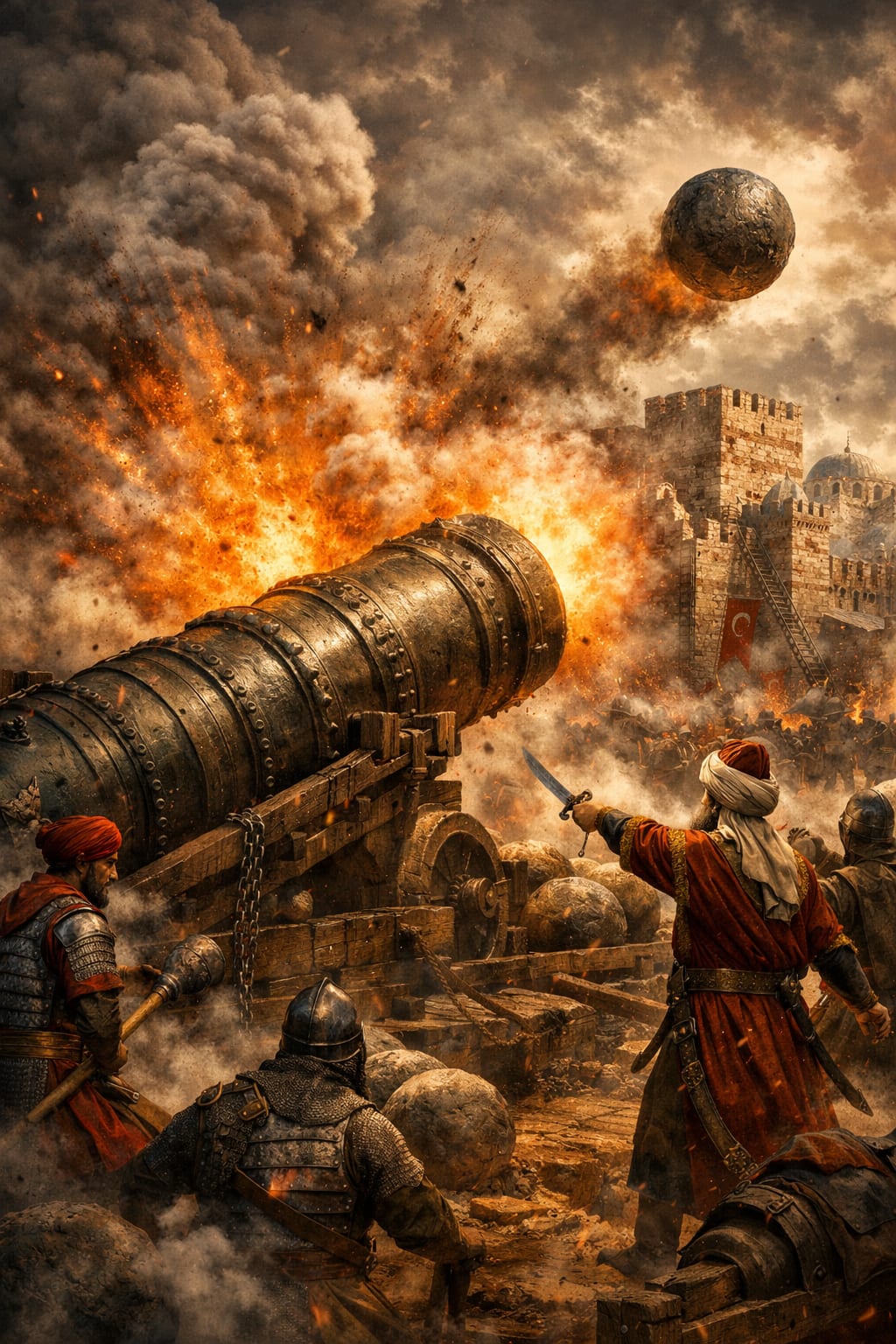
In the annals of military history, few empires owe their early prominence to a single technological innovation as much as the Ottoman Empire. Among these innovations, the development and deployment of massive artillery—especially the formidable cannons—played a pivotal role in transforming the Ottomans into a dominant power spanning three continents. From the siege of Constantinople to the eventual decline of Ottoman influence, the story of their artillery reflects both the empire’s ingenuity and its vulnerabilities.
The origins of Ottoman artillery date back to the 14th and 15th centuries when gunpowder technology began to reshape the battlefield. The Ottomans, located at the crossroads of Europe and Asia, had access to both European and Asian expertise in metallurgy and military engineering. Early Ottoman cannons were smaller and relatively conventional, but as their ambitions grew, so did the size and sophistication of their weaponry. The empire invested heavily in casting massive bronze cannons capable of launching stone projectiles that could demolish the thick walls of fortified cities.
The most iconic moment in Ottoman artillery history came in 1453 during the siege of Constantinople. Sultan Mehmed II, also known as Mehmed the Conqueror, commissioned a series of enormous cannons designed by the Hungarian engineer Orban. The largest of these, known as the “Basilica” or “Great Turkish Bombard,” weighed over 16 tons and fired stone balls measuring more than 24 inches in diameter. This unprecedented firepower allowed the Ottomans to breach the Theodosian Walls, previously considered impregnable, bringing an end to the Byzantine Empire and securing Constantinople—modern-day Istanbul—as the new Ottoman capital. This event cemented the empire’s reputation as a military superpower and demonstrated the transformative impact of artillery on warfare.
The use of cannons did not end with Constantinople. Ottoman forces deployed artillery extensively in campaigns across the Balkans, the Middle East, and North Africa. Cannons provided both psychological and tactical advantages, intimidating enemy troops and dismantling traditional fortifications. Ottoman military engineers continuously refined their designs, introducing mobile field artillery and developing techniques to coordinate artillery with infantry and cavalry. These innovations allowed the empire to expand rapidly, establishing control over a vast and diverse territory.
However, the very technology that had elevated the Ottomans eventually contributed to their stagnation. By the 17th century, European powers had begun developing more advanced and standardized artillery, coupled with professional armies and improved fortification techniques. Ottoman cannon design, while formidable, became increasingly obsolete. The empire struggled to keep pace with the industrial and tactical advancements emerging in Europe. Corruption, logistical difficulties, and resistance to reform slowed modernization, leaving Ottoman artillery—and by extension, military power—lagging behind.
The decline of Ottoman artillery is epitomized in battles such as Vienna in 1683, where the Ottomans faced a coalition of European forces. Although still a significant force, their massive siege cannons and traditional tactics were outmatched by European engineering, artillery precision, and coordinated counterattacks. This marked the beginning of a long period of military decline that would continue through the 18th and 19th centuries, ultimately contributing to the empire’s gradual erosion and eventual dissolution after World War I.
Despite this decline, the Ottoman cannon remains a symbol of innovation and ambition. It represents a time when the empire’s ability to adopt and perfect new technology reshaped geopolitics, shifted the balance of power, and left an indelible mark on military history. From towering bronze bombards to more practical field guns, Ottoman artillery exemplified a unique blend of engineering skill, strategic foresight, and political determination.
In retrospect, the story of Ottoman cannons is a tale of both triumph and caution. Their rise demonstrates how technological innovation can propel a state to global prominence, while their eventual obsolescence highlights the dangers of complacency and resistance to change. The empire that once relied on the thunder of its cannons to expand across continents eventually faced the stark reality that military might alone cannot guarantee enduring supremacy. Yet, even today, the echoes of those great bombards remind historians and enthusiasts alike of an empire that briefly wielded the power to shape the course of history
About the Creator
Irshad Abbasi
Ali ibn Abi Talib (RA) said 📚
“Knowledge is better than wealth, because knowledge protects you, while you have to protect wealth.
Keep reading
More stories from Irshad Abbasi and writers in History and other communities.
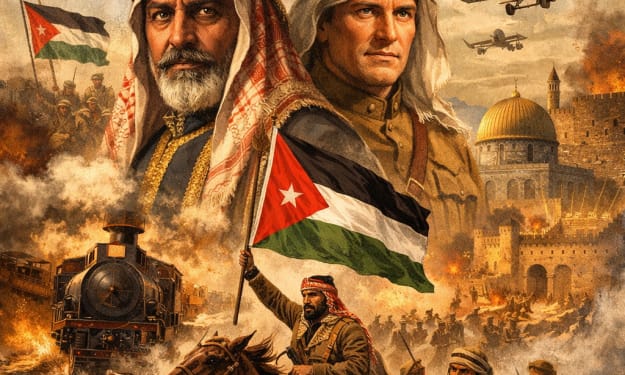
The Arab Revolt: How Arab Forces Allied with the British to Defeat the Ottoman Empire and Create Transjordan
During the early twentieth century, the Middle East was largely under the control of the Ottoman Empire, which had ruled Arab lands for nearly four centuries. However, the outbreak of World War I dramatically changed the political landscape of the region. One of the most significant developments of the war in the Middle East was the Arab Revolt, a rebellion led by Arab leaders with the support of the British. This revolt ultimately contributed to the defeat of Ottoman forces in the region and laid the groundwork for the creation of Transjordan.
By Irshad Abbasi 7 days ago in History
Year 1892 in Review: Fun Facts, Trivia, and Historic Highlights
This quick read is a collection of fun facts, trivia, and historical events from the year 1892. Discover the year’s top news stories, most influential people, U.S. economic trends, historic firsts, entertainment news, and much more.
By Gregory DeVictor5 days ago in History



Comments
There are no comments for this story
Be the first to respond and start the conversation.