
An Interview with Evan Ari Kelman — Writer and Director of Barron's Cove (Part Two)
Discussing deleted scenes, letting actors lead, and freedom in forgiveness.


A few weeks ago, writer-director Evan Ari Kelman and I spoke about Barron's Cove, both the film and the novel. Part one can be found right here, while part two can be found down below.
JD: So you mentioned that a lot of things got cut from the film for the better. Is there any particular sequence in the book that you feel the movie would have been stronger for if it had made its way in?
EAK: I can tell you like a year ago or two years ago, the answer would have been definitely yes, absolutely, 100%, no doubt, you know. Now maybe, I think the answer is maybe.
My taste has changed, and I've become almost more ruthless as I've become, as I've gone through this experience. And there are things now that I wonder maybe I should have cut from the film and left in the book. However, you know, there, there are a couple of, there are a couple of things...
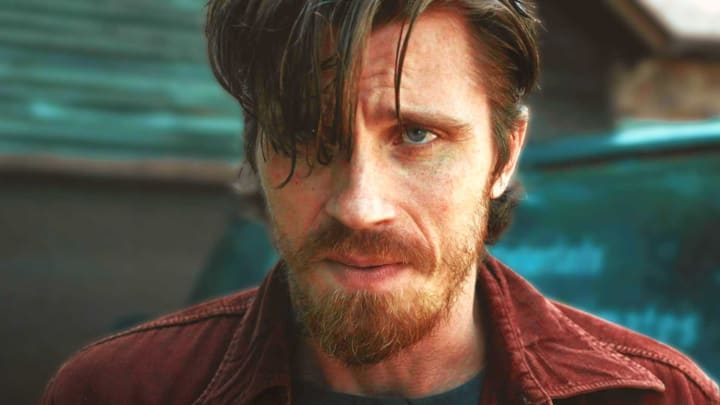
There was this really great raid scene. The midpoint of the movie is Caleb torturing or, or threatening to torture Ethan, and that's when Ethan has this big reveal like, "I don't want to go home."
Because Caleb is basically saying like, "Tell me what you know and I will take you home."
And Ethan says, "I don't want to go home."
And so that removes all the air out from that moment in a good way because Caleb realizes that he doesn't know this kid at all and he doesn't understand his story. He doesn't know what he wants. There's much more going on here.
Like how, why would a child choose to be in this basement being threatened with torture over going home? What's happening at home, you know what I mean? That's, that's the question. It changes the whole film.
And in the script, and this is one of the best things about the script is like we're leading up to that moment through this, you know, increasing threat of, of torture and Caleb's getting angrier and angrier.
In the script, what was really cool and now in the book is that the police get a tip on a house where they think Caleb is. And in the script while Caleb is like getting ready to torture Ethan, the police are closing in on this house, and there's a light on and there's noises coming from inside and the police are about to bust through the door, and it's at that exact moment that they bust in through the door that Caleb is like about to burn Ethan and Ethan says his, his big reveal line, so there's this whole movement towards a singular point.
That was so effective in the script and I, I hope is effective in the book, but we weren't able to do that in the film because it wasn't, you know, we had to prioritize.
We could only shoot the most important thing, which was Caleb on, on the verge of torturing Ethan and getting that answer, and we were not able to shoot the other side of that, which was the police getting a false tip and surrounding a house and like breaking into a house.
Those are really expensive set pieces, you know. I mean, we're talking about like a SWAT team, we're talking about shooting at night. We're talking about a whole new location, that is just serving like this plot, that, that is just serving this like, red herring kind of thing.
And indie filmmaking, you don't... It's really hard to just, you need to justify everything. It needs to be so important and necessary. You know what I mean? So like, that went away. That's not in the movie.
And, you know, as the writer, I just remember feeling like that was really effective on the page.
JD: It sounds cool as hell.
EAK: Yeah, because that was the moment, like, they bust in and it's like in the script, they say it's a tweaker den. Like, there's used drug paraphernalia and they realize they're in the wrong house, and then we as the audience realize that Caleb and Ethan are alone wherever they are. So there's a, it's a, it's a really intense build up and release, that I was proud of as a writer. That was one of them.
There's another thing with Jackie, and we shot this, although not to the fullest extent that it was in the script or in the novel, but Jackie is in this world of original story now in the book, Jackie's pregnant.
Jackie and her new partner Marla, are, are trying for a child. She's pregnant, and so she is a character is torn between her past to an extent, which, you know, is represented by Caleb and Baron and this kind of, and this future, which is represented by Marla and her unborn child.
The conflict that she's in between, you know, does she, does she betray Caleb? Does she prioritize her future child, because in the story there's an interrogation, not an interrogation, there's a scene between Lyle and Jackie, he offers her, he's like, "If you help me with my son, help me find my son, and I will help you with yours."
You know, school is expensive and doctor's visits are expensive... He's basically bribing her to help. And there was a whole component of that because Navarro, the detective found that, found out Jackie was pregnant, and Jackie asked him not to tell anyone, keep it a secret, and Navarro, under a moment of pressure, revealed it to Lyle, and then Lyle uses it against Jackie, to motivate her to turn on Caleb.
So, you know, that's a, that's a sort of complexity that existed in the script and now exists in the novel but was, and it would have been great if there was a Barron's Cove TV show, but rightfully it, it was too much for the film to carry.
JD: So, in terms of specific characters, their motivations, the way they play out on screen and on the page in the book, was there anything that the stars of the film brought to those characters that wasn't there before that you picked up on?
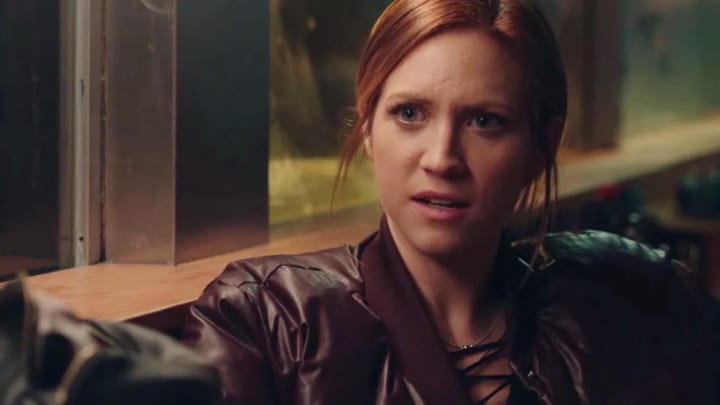
EAK: Of course. You know, this is the greatest gift of a director. It's watching these incredibly talented actors who have such a thorough understanding of the human experience and are masters of their craft take these complex characters that you've written and bring them to life with their own, I don't want to say quirks, but their own specificity that you could never have imagined as the writer.
It's the greatest gift, and there was more than one moment on set where I was basically brought to tears because I couldn't believe what I was seeing. You know, you have these characters in your mind for so long, you have these scenes in your mind, and then to see these incredible actors like bring them to life...
I remember in the diner scene, I mean, it's a relatively straightforward scene between Lyle and Benji, and I love this scene because they're both villains in the story and then they, they have their own kind of power struggle going on. But to watch these two titans, these, and these actors who are so... they are the characters and to see the intensity that they brought to that scene.
I was like literally like wiping tears at the monitor. I couldn't believe it. They became the characters.
JD: That is powerful to have on set. Do you feel like the influence the actors had on their characters made its way into the novel?
EAK: Absolutely, yes. The actors' faces and performances became fused with the characters in my mind. They could not be disconnected when I was writing the novel.
I'm picturing all of those actors in those scenes.
There's no daylight between them, and there were lines, I'm convinced, or performance choices, let's say, that were not in the script that I'm sure are in the novel. They're going to be subtle things.
It's not, you know, monologues, but it's the, the way that somebody found a breath in a certain moment or like, took a moment to compose themselves before making a choice or something like that.
Those decisions are seared into my mind and and are central to the story. Whether they're in the book in a specific way or, you know, it could just be in the writing.
That's one of the nice things about writing prose is you can decide how much kind of room to breathe there is in any particular moment. And the actors are making those same types of decisions in their, in their performance.
So there's a relationship between those two pieces of, A relationship between those decisions, if that makes sense.
JD: Is there any particular feeling or message that you want audiences to take away from the film? And do you feel like the novel expands upon that in a meaningful way?
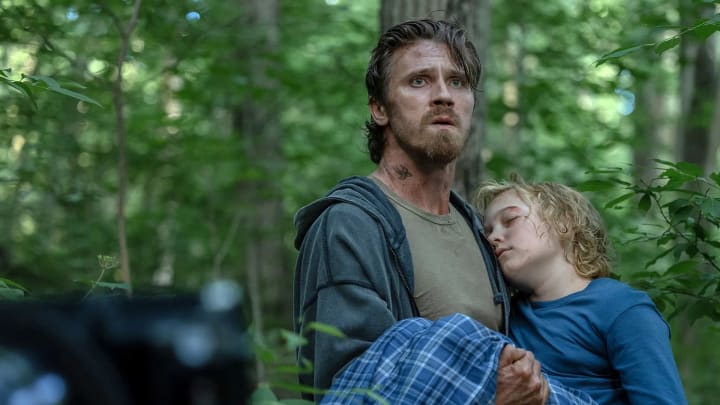
EAK: The most important thing about this story for me was the journey that Caleb goes on.
He starts off the film, you know, angry. He starts off the film with a very, very dim view of himself. In his own words, he calls himself "rot."
He's defined himself as a bad person. As a murderer. You know, "I do bad things. The only value that I have now, especially now that my son is gone, is, is to cause pain and threaten. My life is, is... There's nothing good, there's nothing good that can come out of my life."
And at the end of the film he makes this heroic sacrifice to save the person that murdered his son. That journey was so inspiring to me personally.
The message, I think, and I wrote this down because I wanted to make sure I got it right, was:
We aren't defined by our past, but by the choices we make in the present, and I think there's that that moment where Caleb realizes that he doesn't have to be defined by the worst things he's ever done.
Ethan asks him that question towards the end of the film, "Do we have to be, are we the worst things we've ever done?"
I'm trying to remember what his actual line was. He doesn't say "Do we have to be defined by the worst things we've ever done," he says it the way a kid would say it.
And Caleb says to him, "You don't have to think about that."
And what he's really communicating is like, yes, he believes that we are defined by the worst things we've ever done, that he's defined by the worst things he's ever done, and he makes a decision at the end of the movie that that doesn't have to be true.
He decides to do something courageous and honorable and put his life on the line to save Ethan. And in doing that, he's actually proving through action that the answer is no, that we don't have to be defined by those things, that we can determine who we are in the present.
And so he's, he's basically giving his son's murderer a second chance at life. And so it's this incredible moment of catharsis for Caleb, for Caleb's own character because he's now transformed. He's self-actualized in a sense, where he's broken free of his own self-limiting beliefs to do something courageous and, and choose forgiveness essentially. And in doing that, he's, he's giving Ethan the gift of, of knowing that that's possible, that he doesn't have to be defined by killing Baron.
Does that make sense.
JD: Yeah, absolutely.
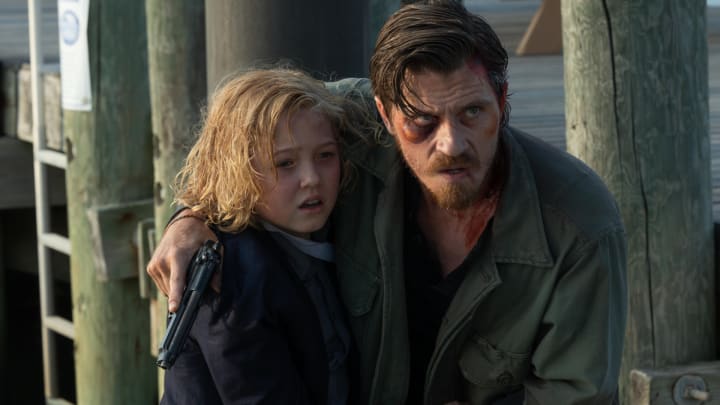
EAK: People need to be reminded of that, you know, we all have self-limiting beliefs that come from how we were raised or from our environment or even our experience or our failures and it's easy for those narratives to control our lives, and we have to be empowered to know that.
We aren't stuck because of that. We have the power to make change and make choices that actually define who, who we're becoming.
There's also a piece in there that I think has to do with forgiveness. You know, if Caleb is able to forgive Ethan, who murdered his son, his only son, the light in his life, then surely there's room for all of us to forgive people who have done much less to us.
Forgive our family for, you know, something that they said or forgive our friend for something that they did. This idea that there's freedom in forgiveness, I think, is an important message. Especially in the current social climate where there's alot of blame and hatred and othering and anger, and I'm not saying it's unjustified and I'm not suggesting like a kumbaya, all is forgiven thing.
JD: A little bit more of a technical question here. You wrote, you directed, you produced, you have also been basically carrying the novel and its publication as a solo act. How well prepared do you think you were for that? And which was the worse/harder experience?
EAK: You know, I think like everything meaningful in life, it's like the tallest trees have the deepest roots, you know what I mean by that? Like, yeah, there is immense difficulty in making a film, but it's worth it.
And in, in some respects, if it were easy, it wouldn't be valuable. I think that's one of the things about AI. Right now, like the AI video generation. It's that because it's so easy to make any of these like short videos that we're seeing go viral.
They're forgotten about in 24 hours, and they don't have any cultural meaning because they're like cheap and easy to make, whereas, you know, the real Mission Impossible, it costs so much money, costs years, sacrifice of so many people involved to do something that they believe in.
So, making the film was undoubtedly harder than writing the book. The book was like a cathartic, freeing experience where I didn't have to worry about budget or time, which as an indie director those things are haunting you constantly. And you have to make a lot of compromises and sacrifices, to finish the movie under those circumstances.
But I struggled to say it was like, it was challenging, but it's hard for me to say like it was a worse experience or a bad experience.
I know that's not what you're suggesting, but I've learned that because it was difficult, it was so, it was so worth it. Not just for the film itself, but for me as a person to have gone through that experience.
You know, people that I meet with now in the industry, they look at what we did with Barron's Cove and under the conditions that we did it in, and it honestly, it gives me a lot of credibility and also gets me a lot of respect.
And I know that if the movie were easy and simple, that that wouldn't be the case, you know what I mean? It's like because we survived, it has the meaning that it has. That's one of just the ironies of life.
Having said that, if I could do anything differently, I mean, there's a lot of things I do differently in a lot of different realms. But in terms of like the book and the movie, I wrote the book after the film was basically finished. It was a short window between when the movie was done and when the movie came to theaters and then came onto Paramount.
And by the time I had the finished book and I was shopping it to publishers, and I spoke to a number of publishers, they were, they loved the material. They were excited that there was a movie tie-in, that there was a built-in audience, but they all said, "We don't have enough time to publish this book."
Like it takes 1 year to publish a book. If we fast forward it in a really uncomfortable, expensive way, like maybe you can do it in like 8 months or something like that. But we really need a year or more to like publish a novel properly.
And at that point, my, you know, the movie was coming to Paramount Plus, within months, you know what I mean? So all the publishers had to pass, and so I'm self-publishing the book, but my intention with the next one is to write the book along with the feature script so that by the time the movie is casting and shooting, we can get well ahead of it with the novel so that a traditional publisher has the runway to publish it if they want to publish it.
That's something that I learned through going through this process.
JD: Okay, and when you say the next one, do you have a particular project in mind? Is there anything that you can tease for the future?
EAK: Yeah, I have another film that I wrote. I wrote a film that I'm extraordinarily proud of. I wrote it in essentially like a fever dream in ten days, which is a record for me.
It took me about, it took me like three years to write Barron's Cove, to figure out the story, to like get it into a place where I could share it with, you know, the people where I felt confident about it. It took me three years.
The movie that I wrote after Barron's Cove, I wrote it in 10 days.
JD: That's ten to eleven pages a day at that rate, right?
EAK: Yeah, it poured out of me, you know, and I, I was basically in a chair writing from 9 a.m. to like 11 p.m. for all of those days, like barely eating and barely getting up, but like I was just in a state where This was, this was a story that I had been percolating on for months already.
So it, I kind of had everything. Again, I tried to find a shortcut and, and like find a co-writer, maybe somebody who, you know, had more writing experience than I did and I met with writers. And they told me their perspectives, but honestly, I didn't connect with their ideas, and I had my own ideas.
I was like, you know, I like what they're saying, but I wanted. .. I have a different vision and at some point I was like, I have to just write it myself.
And once I started, it just became, it became real very quickly, and we have producers attached and we're actually like in the casting process right now. And the casting process can take anywhere from like 6 weeks to a year and a half. It's very hard to know because you have to give actors the time to read the script.
You can only go to one actor at a time. So, you know, it just takes time. So we're in that casting process right now. I, of course, want to shoot the movie as soon as possible. I'd love to shoot it this year. I'm hoping to shoot it this summer, but a lot of that is out of my hands, so.
Yeah, making that movie is, is definitely my, my next big priority. I'm also writing other features that I'm excited about. So, yeah, I have a lot of stories to tell and I'm excited, you know, hopefully I get to do that soon.
JD: I look forward to more from you in the future. Barron's Cove was fantastic, and I've hunted down some of your shorts online, but everything I've seen from you is fantastic.
EAK: Thank you.
You know, my best shorts are on my website, EAKelman.com. There's a narrative page there at the bottom. Maybe they're a little hidden, but I have Bandido on there. I have Where There's Smoke.
Bandido is a story about brothers, and so is Where There's Smoke.
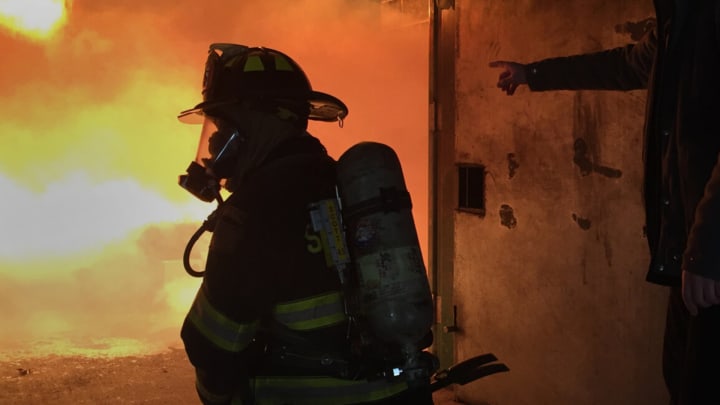
Where there's Smoke is a story about a firefighter who's trying to come back to work after being in an accident, and so it's all about the pressure from his fellow firefighters and is he ready and what role does PTSD kind of play in that process, so.
You know, there is a thematic through line across all these films, and I'm, excited to see how they continue to connect as the stories keep growing.
About the Creator
Keep reading
More stories from John Dodge and writers in Interview and other communities.
Part 2 Interview With Joe Patterson, Author Of Melanin Memoirs
This is my second interview with Joe Patterson. His 4th anniversary writing on Vocal will be in March 2026. He has one achievement on Vocal, The Other Foot. He has over 17,000 reads on Vocal since he started on Vocal in 2022. Joe Patterson is very creative poet and rapper. Joe is deep thinker and I feel it is reflected in his latest published book, Melanin Memoirs.
By Mariann Carroll28 days ago in Interview

Comments
There are no comments for this story
Be the first to respond and start the conversation.