
How Hegseth Came to See Moral Purpose in War as Weakness
Finding Your Voice: Choosing the Most Engaging and Rewarding Community on Vocal Media"

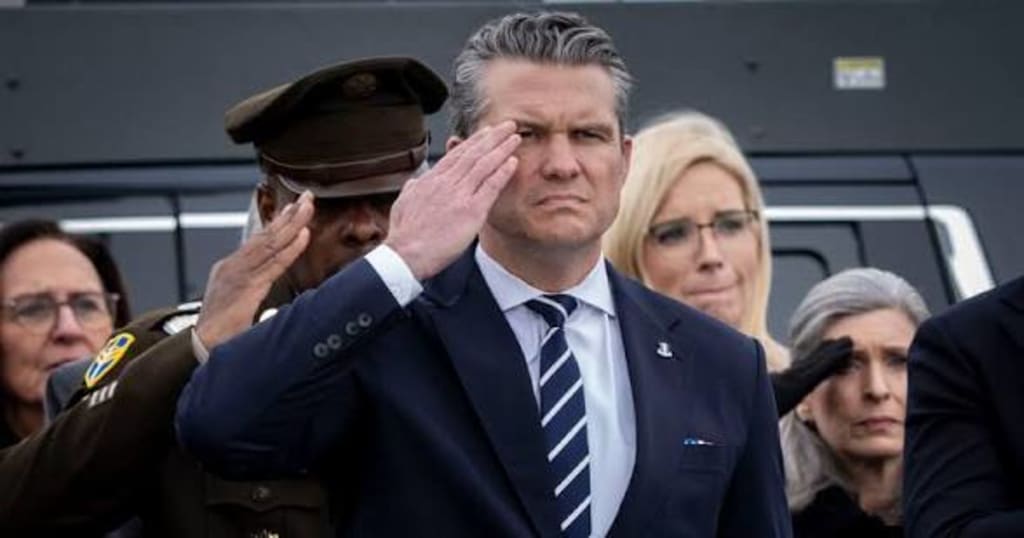
An analytical exploration of the evolution of Pete Hegseth’s war ethos and the implications for U.S. policy
Over the past decade, Pete Hegseth has undergone a dramatic transformation from conservative media personality to one of the most polarizing figures in American military policy. Today serving as the United States Secretary of Defense under President Donald Trump, Hegseth’s public pronouncements and strategic decisions suggest a worldview in which traditional moral frameworks surrounding war are increasingly dismissed as liabilities. What began as rhetorical emphasis on strength and combat readiness has evolved into a broader ideological stance that treats moral purpose in war—moral clarity, restraint, and adherence to legal norms—as signs of weakness rather than virtue.
Hegseth’s rise to prominence began long before his appointment to the Pentagon. As a Fox News host and conservative commentator, he championed aggressive U.S. military action and frequently criticized what he saw as excessive political correctness. In his 2020 book American Crusade: Our Fight to Stay Free, he framed global conflicts in starkly moralistic terms, calling for a broad “crusade” against forces he characterized as hostile to Western civilization. This early rhetoric laid the groundwork for his later rejection of moral constraints on warfare, equating moral caution with lack of resolve.
Once in office, Hegseth’s framing of war shifted further. In public briefings on the current U.S.-Iran conflict—dubbed Operation Epic Fury—he regularly emphasizes military dominance and operational success while refraining from articulating broader humanitarian or moral objectives. “We didn’t start this war but … we’re finishing it,” he told reporters, focusing on strategic outcomes like neutralizing Iran’s missiles and naval capability rather than advancing a clear moral purpose or vision for peace.
Critics argue this shift reflects a deeper intellectual and ethical stance: that moral qualifiers in war make victory harder to achieve. Hegseth has disparaged established rules of engagement and what he calls “politically correct wars,” suggesting that adherence to international legal norms or concerns about civilian casualties constrains effective action. In comments widely circulated on social media, he reportedly scoffed at traditional rules designed to minimize harm, embracing instead a version of warfighting that prioritizes lethality over deliberation.
In broader public discourse, commentators observe that Hegseth’s approach redefines moral purpose—not as a guiding principle that justifies violence only under strict conditions, but as a hindrance that dilutes the effectiveness of military force. This echoes a critical academic debate about the role of moral clarity in war: traditionally seen as essential to maintaining legitimacy and support, moral purpose now, in Hegseth’s framing, appears subordinate to the singular goal of “winning.”
Analysts note that this perspective aligns with a broader trend in some conservative circles that equates restraint with weakness. Under this view, moral purpose—whether rooted in international law, humanitarian concern, or the protection of noncombatants—is often portrayed as undermining national strength and strategic advantage. Instead, proponents argue, moral restraint handicaps military operations by imposing constraints that adversaries do not accept or follow. Hegseth’s critics, however, warn that this logic risks eroding longstanding norms designed to limit suffering and uphold a rules‑based international order.
The implications of this philosophical shift are substantial. On the battlefield, dismissing moral purpose can lead to decisions that escalate violence and damage alliances. Outside war zones, it raises questions about the U.S. commitment to global norms and its moral leadership. When moral restraint is reframed not as strategic prudence but as “weakness,” the boundaries that separate responsible military action from unchecked aggression become blurred.
This evolution in Hegseth’s rhetoric and policy underscores a broader tension in American strategic culture: the balance between strength and ethics. While military potency is undeniably central to national security, history demonstrates that moral purpose in war—rules of engagement, protection of civilians, legal accountability—serves essential functions, both practical and normative. When war is waged without meaningful moral purpose, critics warn, it may achieve tactical objectives at the cost of long‑term strategic stability and international legitimacy.
In redefining moral purpose as weakness, Hegseth embodies a school of thought that prizes power over principle. Whether this approach will prove effective—or whether it will deepen divisions and erode foundational norms of conduct in warfare—remains a pivotal question in U.S. defense policy.
About the Creator
Fiaz Ahmed
I am Fiaz Ahmed. I am a passionate writer. I love covering trending topics and breaking news. With a sharp eye for what’s happening around the world, and crafts timely and engaging stories that keep readers informed and updated.
Keep reading
More stories from Fiaz Ahmed and writers in Longevity and other communities.
Private Jet Pilots Salary in the World in 2026
Private jet pilots remain among the best-paid professionals in aviation in 2026, as the rapid growth of corporate and luxury air travel continues to expand opportunities worldwide. While airline pilots often receive the most public attention, pilots flying private jets for wealthy individuals, corporations, and charter companies frequently earn competitive salaries, flexible schedules, and exclusive career opportunities. Private aviation has grown significantly over the past decade, driven by high-net-worth individuals, multinational corporations, and governments that rely on private aircraft for efficiency and security. As a result, the demand for experienced private jet pilots has increased globally, contributing to higher salaries and improved benefits packages. Average Private Jet Pilot Salary in 2026 In 2026, private jet pilots around the world typically earn between $65,000 and $350,000 per year, depending on experience, aircraft type, and employer. Some highly experienced captains flying ultra-long-range business jets can earn even more. The aviation job market is also influenced by a global pilot shortage, which has encouraged many companies to offer higher pay and incentives to attract qualified pilots. According to industry data, the average private jet pilot salary globally is around $130,000 annually, though the figure can vary significantly depending on region and role. Salary by Experience Level Like most aviation careers, experience plays a major role in determining how much a private jet pilot earns. Entry-level pilots, usually working as first officers or co-pilots, earn around $50,000 to $85,000 annually. These pilots typically have limited flight hours and are still building experience with charter companies or smaller aircraft operators. Mid-career pilots, with several thousand hours of flight experience, usually earn between $85,000 and $150,000 per year. They may fly larger business jets or work for established corporate aviation departments. Senior captains, who often have more than 5,000 flight hours and extensive training, can earn $150,000 to $250,000 or more annually. These pilots typically command large luxury aircraft used for international travel by corporations and wealthy clients. In some elite positions—such as flying ultra-long-range jets like Gulfstreams or Bombardier Global aircraft—captains can earn over $300,000 per year, particularly when bonuses and allowances are included. Regional Salary Differences Private jet pilot salaries vary significantly by region due to economic conditions, demand, and the size of the private aviation market. United States The United States remains the largest private aviation market. Pilots there earn an average of about $131,000 annually, with experienced captains earning far more depending on aircraft type and employer. Europe In Western Europe, salaries typically range from €70,000 to €150,000 per year, while Eastern European markets tend to offer lower pay due to smaller private aviation sectors. Middle East Countries in the Middle East, especially the United Arab Emirates and Saudi Arabia, offer some of the most attractive compensation packages. Pilots can earn $100,000 to $180,000 annually, often with tax-free income and housing allowances. Asia-Pacific Rapid economic growth in countries such as China and Singapore has expanded the private aviation market in Asia. Experienced private jet pilots in this region can earn well above $200,000 per year depending on aircraft type and contract conditions. Factors That Influence Salary Several factors determine how much a private jet pilot earns. Aircraft type is one of the biggest influences. Pilots flying larger or long-range aircraft typically earn more because these jets require advanced training and greater responsibility. Experience and flight hours also play a major role. Pilots with thousands of hours logged and multiple aircraft certifications can negotiate significantly higher salaries. Employer type is another important factor. Corporate flight departments for large companies often offer higher salaries and more stable schedules compared with charter operators or freelance contracts. Additional Benefits In addition to base salary, private jet pilots frequently receive a range of benefits, including: Housing allowances Travel and meal allowances Health insurance Retirement plans Performance bonuses These benefits can significantly increase a pilot’s total compensation package. Outlook for the Future The outlook for private jet pilots remains strong in 2026. Growing global wealth, expanding corporate travel, and increased demand for private aviation continue to support the industry. As a result, skilled pilots are likely to remain in high demand. For aspiring aviators, becoming a private jet pilot requires years of training, thousands of flight hours, and specialized certifications. However, for those who reach the top levels of the profession, the financial rewards and career opportunities can be exceptional. In a rapidly evolving aviation landscape, private jet pilots continue to play a crucial role in connecting global business leaders, governments, and high-profile individuals across continents—while enjoying one of the most lucrative careers in the skies.
By Fiaz Ahmed a day ago in Longevity
Beginner Workout Routine at Home Without Equipment (Step-by-Step Full Body Guide)
Introduction Starting a fitness journey can feel overwhelming, especially for beginners who do not have access to a gym or expensive workout equipment. Many people want to improve their health and strength but are unsure where to begin or worry that working out at home may not be effective. The good news is that you do not need a gym membership or specialized machines to build a strong and healthy body. A well-structured beginner workout routine at home without equipment can help you develop strength, improve endurance, and establish a sustainable fitness habit.
By Core Well Fit3 days ago in Longevity
🧓 The Best Breakfast for the Elderly
Breakfast is often called the most important meal of the day, and for older adults, it plays an even bigger role in maintaining health and energy. After a long night without food, the body needs nutrients to restore energy levels and support normal body functions.
By Being Inquisitivea day ago in Longevity



Comments
There are no comments for this story
Be the first to respond and start the conversation.