
Attacks Reported on Three More Cargo Ships in Gulf, With Oil Prices Climbing Near $100
Maritime security fears intensify as escalating tensions threaten vital global shipping routes.

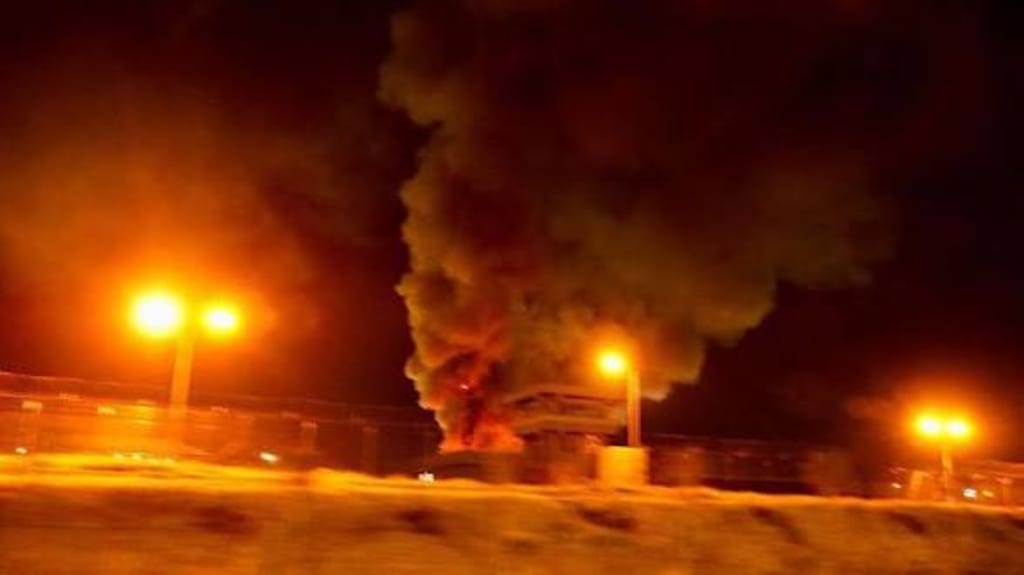
Fresh attacks on three cargo ships in the Gulf region have heightened concerns about maritime security and pushed global oil prices close to the $100-per-barrel mark, underscoring the fragile stability of energy supply routes in the Middle East.
According to shipping industry sources and regional officials, the vessels were targeted in separate incidents while navigating waters near the strategically crucial Strait of Hormuz and surrounding Gulf shipping lanes. The attacks reportedly involved drones or small explosive devices, although investigations are ongoing and the exact methods used have not been fully confirmed.
The Strait of Hormuz, situated between Iran and Oman, serves as one of the world’s most important energy corridors. Nearly a fifth of global oil shipments pass through the narrow waterway each day, transporting crude from major producers such as Saudi Arabia, United Arab Emirates, and Kuwait to markets in Asia, Europe, and beyond.
Security officials say the three affected cargo vessels sustained varying levels of damage but were able to remain afloat and continue to nearby ports for inspection. No fatalities were reported, though several crew members were said to have suffered minor injuries.
The incidents come amid rising geopolitical tensions across the Middle East. Western governments and regional observers have linked recent maritime disruptions to broader regional confrontations involving Iran and its allies, though responsibility for the latest attacks has not yet been officially attributed.
Naval forces operating in the Gulf quickly responded after distress signals were transmitted by the ships. Patrol vessels from the U.S. Fifth Fleet, based in Manama in Bahrain, reportedly moved into the area to assist with monitoring and escort operations while investigators began assessing the situation.
The U.S. Navy and its partners have maintained a heightened presence in the Gulf since a series of attacks on oil tankers in recent years raised fears that commercial shipping could become a target in wider regional disputes. Maritime security patrols are often coordinated through the multinational International Maritime Security Construct, which includes several allied nations.
Energy markets reacted swiftly to the news. Traders cited concerns that repeated incidents could disrupt the flow of oil through the Gulf, a scenario that historically leads to rapid price spikes. Benchmark crude prices surged during trading sessions, approaching the symbolic $100 threshold that many economists see as a warning sign for the global economy.
Analysts note that oil markets are particularly sensitive to threats around the Strait of Hormuz because there are few alternative routes capable of handling such massive export volumes. Even temporary disruptions or perceived risks can drive speculation and push prices higher.
The attacks also highlight the growing use of asymmetric tactics in maritime conflicts. Security experts say relatively inexpensive drones, mines, and fast attack boats can pose serious threats to large commercial vessels navigating narrow waterways.
Regional tensions have already been elevated by the continuing repercussions of the Israel–Hamas war, which has drawn multiple actors into confrontations across the Middle East. Shipping routes in nearby seas have increasingly become strategic pressure points in the broader geopolitical struggle.
Iran has repeatedly warned that instability in the region could threaten maritime traffic, particularly if it perceives pressure on its own energy exports. Western governments, however, have accused Iranian-linked forces of attempting to intimidate international shipping to gain leverage in diplomatic disputes.
Shipping companies are now reassessing risk levels for vessels traveling through Gulf waters. Insurance premiums for tankers and cargo ships transiting the region have already begun to climb as underwriters factor in the possibility of further attacks.
Despite the rising tensions, maritime authorities say commercial traffic through the Strait of Hormuz continues to move, albeit with heightened caution. Many ships are operating with additional security protocols, including increased surveillance and closer coordination with naval forces.
Diplomats and energy analysts warn that continued incidents could have broader consequences beyond the shipping industry. If attacks persist and oil prices remain elevated, the ripple effects could be felt across global economies already struggling with inflation and energy supply concerns.
For now, the Gulf remains one of the world’s most critical—and increasingly vulnerable—energy arteries. As investigations into the latest attacks continue, governments and shipping companies alike are watching closely to see whether the region’s fragile balance can be maintained or whether tensions will push the vital trade corridor toward a deeper crisis.
About the Creator
Fiaz Ahmed
I am Fiaz Ahmed. I am a passionate writer. I love covering trending topics and breaking news. With a sharp eye for what’s happening around the world, and crafts timely and engaging stories that keep readers informed and updated.
Keep reading
More stories from Fiaz Ahmed and writers in The Swamp and other communities.
Eight Arab, Islamic Countries Condemn Israeli Closure of Al-Aqsa Mosque
A coalition of eight Arab and Islamic countries has strongly condemned Israel’s temporary closure and tightened restrictions around the revered Al-Aqsa Mosque compound, warning that the move risks escalating tensions in the already fragile political and security environment of the region. The mosque, located in the contested city of Jerusalem, is one of Islam’s holiest sites and a central symbol in the decades-long Israeli–Palestinian conflict. The governments of Jordan, Saudi Arabia, Qatar, Turkey, Egypt, Kuwait, Pakistan, and Malaysia issued coordinated statements condemning what they described as an unjustified restriction on Muslim worshippers. The diplomatic statements called on Israel to immediately reopen the mosque compound and respect the historical and legal status quo governing the site. Israeli authorities said the closure was implemented for security reasons following clashes and intelligence warnings of possible unrest. Security forces temporarily restricted access to parts of the compound, citing concerns about violence between Palestinian protesters and Israeli police. However, the measures quickly triggered outrage across the Muslim world. Jordan, which historically holds custodianship over Islamic holy sites in Jerusalem through the Jerusalem Islamic Waqf, issued one of the strongest reactions. Amman’s foreign ministry described the move as a “dangerous escalation” and a violation of international law and existing agreements that regulate the administration of the mosque compound, also known to Muslims as Haram al-Sharif. Saudi Arabia also voiced deep concern, emphasizing the importance of safeguarding freedom of worship. The kingdom’s foreign ministry said the restrictions represented “a clear infringement on the sanctity of holy places,” urging the international community to intervene to prevent further deterioration of the situation. Turkey’s government echoed similar sentiments, accusing Israel of provoking tensions and undermining regional stability. Ankara warned that actions targeting the mosque could spark broader unrest among Muslim communities worldwide. Egypt and Qatar, both influential mediators in regional diplomacy, called for restraint on all sides while demanding the immediate restoration of normal access for worshippers. Officials from both countries stressed that any measures affecting Al-Aqsa carry enormous political and religious sensitivities that extend far beyond the borders of Israel and the Palestinian territories. Pakistan and Malaysia also joined the condemnation, framing the issue as part of the wider Palestinian struggle. Their foreign ministries reiterated support for Palestinian rights and urged international organizations to hold Israel accountable for actions that restrict access to holy sites. The compound housing Al-Aqsa Mosque is also revered by Jews as the Temple Mount, making it one of the most sensitive religious locations in the world. Any change in security arrangements there often sparks strong reactions from both Palestinians and Israelis. Past incidents involving restrictions or police raids have triggered widespread protests and sometimes violent confrontations. Palestinian leaders and religious authorities in Jerusalem said the closure disrupted prayers and created an atmosphere of fear among worshippers. Several Palestinian groups called for international pressure on Israel to guarantee free access to the mosque, particularly during important religious periods when thousands of worshippers normally gather there. International observers note that tensions surrounding the site frequently mirror broader political developments in the Israeli-Palestinian conflict. Analysts warn that disputes over access to Al-Aqsa Mosque can quickly escalate into wider unrest in Jerusalem, the West Bank, and even across the region. Diplomatic sources say behind-the-scenes efforts are already underway to de-escalate the situation. Regional mediators, including Jordan and Egypt, are believed to be in contact with Israeli officials to negotiate security arrangements that would allow the mosque to reopen fully while preventing further clashes. Despite these efforts, the episode highlights how deeply symbolic sites like Al-Aqsa remain flashpoints in Middle Eastern politics. For millions of Muslims around the world, the mosque represents not only a sacred place of worship but also a powerful symbol of identity and sovereignty. As diplomatic pressure mounts, the coming days will determine whether calm can be restored or whether the dispute will further inflame tensions in one of the world’s most volatile regions.
By Fiaz Ahmed about 19 hours ago in The Swamp
A Gathering of Evil Bosses
“I’m the queen of chin jutting while I smooth my hair, attacking, insulting, and deflecting to protect my appointer.” “Oh, please, Blondi, my hair is curled, highlighted, and longer than yours. I feature television commercials telling immigrants that we will give them a free plane ride home, and if they voluntarily turn themselves in, they will be allowed to legally apply for re-entry. It runs everywhere, and I look good in it! You can’t compete because of your blond hair. Mine is nicer, and my lips are prettier than yours.”
By Andrea Corwin 22 days ago in The Swamp
Becca
"Everything is so... flat." Denille said stupidly as she looked around her new neighborhood. She looked around at the muted desert where even the smallest sign of life seemed to have given up. The plant life was shrubs that were half cooked by the heat and where there should have been a lawn, a mess of white rocks laid glistening in the sun. Even the sky looked stretched thin, like the sun had ironed it smooth. She’d moved from Riverside, where at least there were hills, but here in Barstow, everything felt baked and brittle.
By Sara Wilson7 days ago in Fiction



Comments
There are no comments for this story
Be the first to respond and start the conversation.