
‘No Popular Support’: China Warns Against Government Change in Iran
Beijing stresses sovereignty and diplomacy, warning external attempts at government change in Tehran will fail. China urges negotiation over force as tensions escalate in the Middle East conflict. Foreign minister Wang Yi says outside interference lacks popular support and threatens regional stability. Beijing calls for political settlement amid rising global pressure on Iran. China positions itself as advocate for dialogue and warns against foreign-engineered regime change.

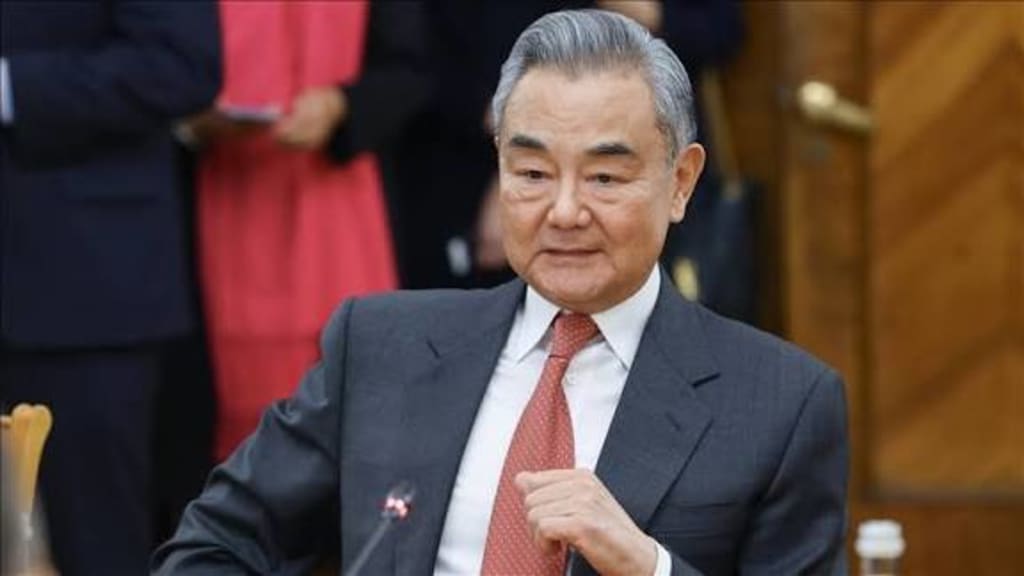
In a highly anticipated foreign policy statement on March 8, China delivered a clear warning against efforts aimed at changing the government in Iran, arguing that such moves lack popular support and could further destabilise an already volatile Middle East.
Speaking at a major news conference in Beijing on the sidelines of the annual legislative meetings, China’s Foreign Minister Wang Yi emphasised that attempts to engineer a “colour revolution” or impose political change from the outside would not succeed, stating bluntly that such efforts “will find no popular support.”
The comments come amid the intensifying conflict between the United States, Israel, and Iran, which escalated into major military confrontations after US‑led and Israeli air strikes targeted Iranian facilities. China’s position reflects its long‑standing policy of opposing foreign interference in the internal affairs of sovereign states, and underscores Beijing’s desire to see political disputes resolved through dialogue rather than force.
A Firm Call for Sovereignty and Non‑Interference
At the news conference, Wang stressed that the sovereignty and territorial integrity of nations—especially those in the Middle East—must be respected. He described the ongoing conflict as a war “that should never have happened” and warned that armed hostilities benefit no side, instead breeding hatred and new crises.
In emphasising this stance, Wang reiterated a core principle of Chinese foreign policy: that regional issues should be resolved by the countries directly affected, without external pressure or imposed political change. “Middle East affairs should be determined by regional countries independently,” he said. “The people of the Middle East are the true masters of this region.”
This warning against overseas efforts to shift Iran’s government appears explicitly tied to broader allegations about attempts to instigate regime change under the cover of conflict. China’s official position is that such tactics are unlikely to garner authentic domestic support within Iran and risk magnifying instability across the region.
China’s Push for Political Dialogue
Beyond discouraging regime change, Beijing called for a complete political settlement of the crisis through negotiation.
Wang urged all involved parties to “return to the negotiating table as quickly as possible,” emphasising dialogue as the only viable path toward lasting peace and security. He underscored the importance of equitable diplomatic engagement that respects all sides’ concerns and interests.
China also articulated a broader vision for regional security, pushing for what it calls a Global Security Initiative—an approach that seeks to involve regional partners in constructive diplomacy rather than punitive military actions.
A Broader Message to the International Community
Wang’s comments also appeared to be a calibrated message to Western powers, particularly the United States. While he did not name any country directly as the architect of regime change efforts, his remarks implicitly responded to persistent Western claims that political change in Iran might be necessary to end the conflict or transform Tehran’s policies.
Speaking to reporters, Wang stated that strong military action and forced political change do not equate to genuine strength. “A strong fist does not mean strong reason,” he said. “The world cannot return to the law of the jungle.”
This critique aligns with China’s broader diplomatic posture: advocating for multilateral respect and cautioning against unilateral actions that undermine state sovereignty.
Challenges and Contradictions
China’s position on Iran comes as global powers grapple with the scale and humanitarian impact of the war. While Beijing emphasises diplomacy and a political settlement, several Western nations have indicated support for leadership change or pressure tactics to alter Iran’s behaviour, deepening the divide in international responses.
Analysts note that this divergence highlights competing worldviews: China promotes a model prioritising non‑interference and negotiated dialogue, whereas Western powers, particularly the United States, have been more willing to endorse pressure and, in some cases, regime change as a means to reshape adversarial states. The differing approaches reflect long‑standing strategic friction between major powers and how they interpret global security and order.
Domestic Perspectives on Iran’s System
Wang’s assertion that regime change lacks popular support is especially significant when viewed against internal Iranian dynamics. Surveys conducted in recent years suggest Iranian public opinion is complex; while significant dissatisfaction exists regarding governance and economic conditions, there has not been broad, sustained backing for top‑down regime replacement engineered from outside the country.
These internal divisions add nuance to Beijing’s claim: not only would external pressure be unwelcome, but efforts aimed at systematic political overhaul might not resonate with the broader population.
What This Means Going Forward
China’s warnings against government change in Iran are part of a larger diplomatic playbook that emphasises sovereignty, negotiation, and stability. Whether this stance will influence concrete outcomes in the war remains uncertain, especially as geopolitical competition intensifies, involving multiple global powers with divergent interests.
However, Beijing’s public position underscores a clear message: external attempts to remake Iran’s government are unlikely to garner legitimacy or support, and the only path toward lasting peace lies in sustained diplomacy and mutual respect among nations.
About the Creator
Fiaz Ahmed
I am Fiaz Ahmed. I am a passionate writer. I love covering trending topics and breaking news. With a sharp eye for what’s happening around the world, and crafts timely and engaging stories that keep readers informed and updated.
Keep reading
More stories from Fiaz Ahmed and writers in The Swamp and other communities.
For Israel’s Netanyahu, Trump grants wishes, but his support carries risks
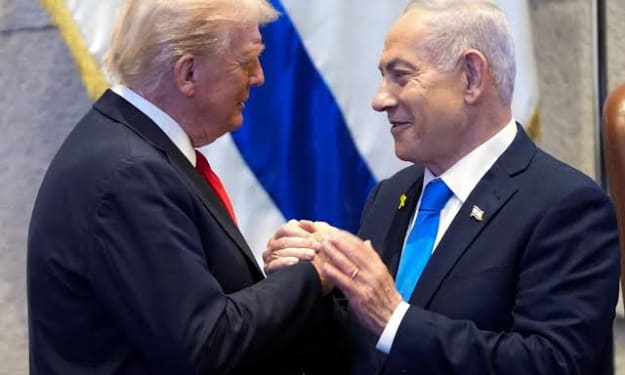
In the long and complex alliance between Benjamin Netanyahu and Donald Trump, the U.S. leader has delivered some of the most significant policy victories the Israeli premier has pursued for years. Yet while these achievements have reshaped the Middle East and bolstered Netanyahu’s standing with many supporters, they also carry risks that could have lasting political and diplomatic consequences. Over the past five years, Trump has granted a string of Netanyahu’s long‑standing strategic wishes, starting with symbolic but consequential decisions early in his presidency. Trump moved the U.S. Embassy to Jerusalem, a step long demanded by Israeli leaders and supporters; formally recognised Israeli sovereignty over the Golan Heights, territory captured from Syria in 1967; withdrew the United States from the international nuclear agreement with Iran; and significantly cut U.N. funding for Palestinian refugees. But none of these moves compares in scale to Trump’s recent embrace of the joint military campaign against Iran—a campaign that Netanyahu long sought and which represents the most consequential gamble of their partnership yet. What began as deepening tensions with Tehran has escalated into a full‑scale conflict involving U.S. forces alongside Israeli operations. For Netanyahu, this intervention is more than just a strategic victory—it is a political lifeline. A Strategic Bet in an Election Year Netanyahu, trailing in polls and facing persistent legal challenges at home, is betting that the war—with Trump’s backing—can rekindle a surge of nationalist support that might secure his political survival. Experts say the prime minister is likely to capitalise on the ongoing conflict to call early elections, hoping that a wave of patriotic sentiment will carry him back into a stronger parliamentary position. Israel must hold elections by late October this year, and many analysts believe Netanyahu sees an immediate wartime context as his best opportunity to salvage his political career. Political scientist Gayil Talshir of Hebrew University summed up the situation by pointing to the existential nature of the conflict. “Everything else can be forgotten because this is the big one,” she said, referring to the military campaign against Iran as the defining issue of Netanyahu’s era. But linking domestic political fortunes to an ongoing war carries real dangers—particularly when it involves another major power like the United States, whose own domestic politics may not align with Netanyahu’s expectations. Risks for Trump’s Base and U.S. Politics For Trump, the alliance has helped cement his image among many conservative voters, especially those inclined toward strong American support for Israel. In Israel itself, Trump enjoys extraordinary popularity; some polls show his approval within the country exceeding that among key voter blocs in the United States. Yet Trump’s support for an increasingly controversial and protracted conflict has also strained his political base in the U.S. Many Republicans who favour a more isolationist posture question a deepening military involvement, while Democrats and independents have grown critical of the human cost and strategic ambiguity of the war. Rising fuel prices and extended American casualties only amplify these political pressures. The war’s unpredictability complicates Trump’s broader political ambitions. An over‑reliance on Netanyahu’s strategic priorities could alienate portions of the Republican base and temper voter enthusiasm in key demographics—particularly among younger voters and communities more sympathetic to a diplomatic resolution or concerned about humanitarian impact. Strains and Strategic Tension Despite the strong partnership between the two leaders, their relationship has not been without tension. Trump has occasionally pushed back against some of Netanyahu’s policies, such as annexation efforts in the West Bank, and has encouraged moves toward a future pathway to Palestinian self‑determination—proposals that Netanyahu historically resisted. These moments illustrate the fragile balance between unconditional support and strategic disagreement. EWN Moreover, Trump’s public calls for Isaac Herzog to pardon Netanyahu from longstanding corruption charges underscore the political entanglement of foreign policy with domestic Israel politics. Trump’s pressure for Herzog to grant clemency—even as the nation remains at war—highlights how external advocacy can complicate Israel’s internal legal and political processes. Long‑Term Consequences for the Alliance Internationally, the deepening U.S.–Israel partnership could affect broader diplomatic alignments. Allies in Europe and across the Middle East may be wary of being drawn into a conflict that seems increasingly personalised around the political fortunes of two leaders. Analysts suggest that if the war doesn’t achieve a clear strategic outcome, the blame may return to both Netanyahu and Trump, with potential fallout in regional diplomacy and future peace negotiations. Ultimately, the political calculus that has driven Netanyahu and Trump together in pursuit of mutual goals may prove double‑edged. The military campaign against Iran may be the strategic high point of their partnership—but it also carries deep risks that extend well beyond battlefield victories. For Netanyahu, it could be the defining gamble of his political life; for Trump, it may shape his legacy in ways that reverberate long after the conflict has subsided.
By Fiaz Ahmed 5 days ago in The Swamp
A Gathering of Evil Bosses
“I’m the queen of chin jutting while I smooth my hair, attacking, insulting, and deflecting to protect my appointer.” “Oh, please, Blondi, my hair is curled, highlighted, and longer than yours. I feature television commercials telling immigrants that we will give them a free plane ride home, and if they voluntarily turn themselves in, they will be allowed to legally apply for re-entry. It runs everywhere, and I look good in it! You can’t compete because of your blond hair. Mine is nicer, and my lips are prettier than yours.”
By Andrea Corwin 23 days ago in The Swamp


Comments
There are no comments for this story
Be the first to respond and start the conversation.