
Oil Price Reaches $100 Again as New Attacks Reported on Three Cargo Ships in Gulf
Escalating maritime attacks in the Persian Gulf push crude prices back into triple digits, raising fears of a wider energy crisis and disruption to global trade
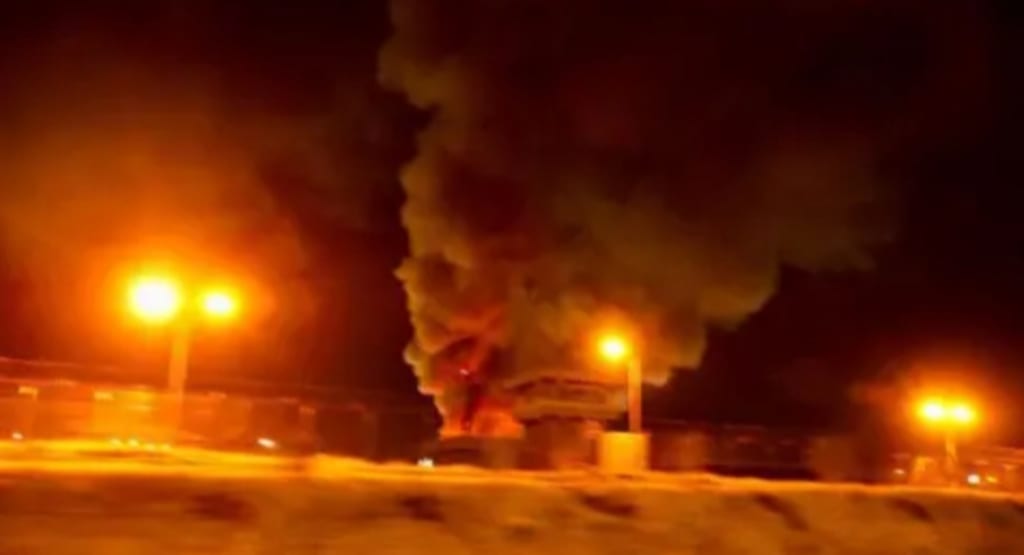
Global oil markets were shaken once again after reports emerged that three cargo ships were attacked in the Persian Gulf, sending crude prices soaring past the critical $100 per barrel mark. The incidents have intensified concerns that the ongoing regional conflict involving Iran could spiral further and threaten vital shipping routes that supply energy to much of the world.
Energy analysts say the attacks highlight how quickly geopolitical tensions can ripple through global markets. Even isolated maritime incidents can disrupt shipping confidence, insurance costs, and oil supply expectations — all of which influence prices almost immediately.
The attacks reportedly occurred near the Strait of Hormuz, one of the most important energy transit routes on the planet. Roughly one-fifth of the world’s crude oil supply passes through this narrow waterway every day, connecting oil-producing nations in the Gulf to global markets.
What Happened in the Gulf
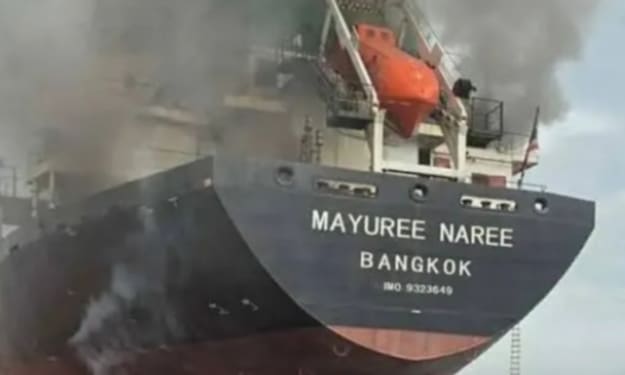
According to early reports from maritime security agencies, three commercial cargo vessels were struck in separate incidents within hours of each other in the Persian Gulf. The attacks triggered distress signals and emergency response operations from nearby naval forces and commercial ships.
While details are still emerging, initial assessments suggest the vessels may have been targeted by missiles, drones, or explosive devices. The exact perpetrators have not yet been confirmed, but the incidents occurred amid escalating regional tensions tied to the broader conflict surrounding Iran.
Some crew members were reportedly injured, and damage to the ships forced temporary suspensions of transit through certain parts of the Gulf as authorities assessed the security situation.
Why Oil Prices Jumped to $100
Oil prices react quickly to geopolitical risk, especially when the threat involves key transportation corridors.
When news of the attacks broke, traders immediately priced in the possibility of supply disruptions. Even if physical supply has not yet been significantly reduced, the mere risk of disruption can push prices higher.
Several factors contributed to the sudden spike:
Shipping risks: Tankers may avoid the area, slowing oil deliveries.
Insurance premiums: War-risk insurance for ships traveling through the Gulf increases sharply during crises.
Supply fears: Markets worry that future attacks could close or restrict shipping lanes.
Speculation: Traders buy futures contracts anticipating higher prices.
As a result, benchmark crude oil prices surged back to $100 per barrel, a level not seen for months.
The Strategic Importance of the Strait of Hormuz
The Strait of Hormuz is a narrow waterway between Iran and Oman that serves as the main export route for oil from the Persian Gulf.
Major energy exporters such as Saudi Arabia, Kuwait, Iraq, and the United Arab Emirates rely heavily on the strait to ship oil to global markets. Any disruption — whether from military conflict, attacks on ships, or naval blockades — can significantly impact the global energy supply.
Because of this importance, the strait has long been viewed as one of the most sensitive geopolitical flashpoints in the world.
Even small incidents in the area can send shockwaves through energy markets.
Global Markets React
Financial markets quickly reacted to the rising tensions and the jump in oil prices.
Energy stocks surged as investors anticipated higher profits for oil producers, while transportation and airline companies faced pressure due to the prospect of rising fuel costs.
Higher oil prices can also have broader economic consequences, including:
Increased inflation due to higher fuel and transportation costs
Rising production expenses for manufacturers
Higher consumer prices for goods and services
Economists warn that sustained oil prices above $100 could complicate efforts by central banks to control inflation and stabilize economic growth.
International Security Concerns
The attacks on cargo ships have triggered heightened security alerts among naval forces operating in the Gulf region.
Countries including the United States, the United Kingdom, and several European allies maintain naval patrols in the area to protect commercial shipping and ensure freedom of navigation.
Maritime authorities are now urging shipping companies to exercise extreme caution when traveling through the region.
Meanwhile, the International Maritime Organization has called for calm and urged all parties to avoid actions that could threaten civilian vessels.
Protecting international shipping lanes remains a top priority, as disruptions could quickly escalate into a global trade crisis.
Impact on Global Energy Policy
The renewed spike in oil prices is also fueling debate about energy security and diversification.
Governments around the world have already begun discussing emergency measures, including tapping strategic petroleum reserves to stabilize markets.
Energy analysts say the latest developments highlight the vulnerabilities of global energy supply chains.
Many countries remain heavily dependent on oil transported through geopolitically sensitive regions such as the Persian Gulf.
As a result, policymakers may accelerate efforts to diversify energy sources, expand domestic production, or invest in renewable energy alternatives.
Shipping Industry on High Alert
For the global shipping industry, the attacks represent a serious concern.
Commercial vessels traveling through the Gulf must now weigh the risks of continuing operations against the potential financial losses from delays or rerouted shipments.
Shipping companies may choose to reroute vessels around Africa or other longer routes, though doing so can add weeks of travel time and significantly higher costs.
Insurance companies are also likely to increase war-risk premiums for ships entering the Gulf, further raising transportation costs.
These factors could eventually ripple through global supply chains and consumer markets.
What Happens Next?
The situation in the Gulf remains fluid, and much will depend on whether further attacks occur.
If the security situation stabilizes quickly, oil prices could retreat as shipping resumes normal operations.
However, if attacks continue or escalate, markets could face prolonged volatility and potentially even higher energy prices.
Governments, shipping companies, and energy markets are now watching closely for any signs that the conflict could expand or threaten major oil infrastructure.
Conclusion
The return of $100 oil following attacks on cargo ships in the Persian Gulf underscores the fragile relationship between geopolitics and global energy markets.
The Strait of Hormuz remains one of the most critical chokepoints in the global economy, and any threat to shipping there can have immediate worldwide consequences.
As tensions surrounding Iran continue to unfold, the safety of maritime trade routes will remain a key factor shaping oil prices, economic stability, and international security.
For now, markets are bracing for uncertainty — and the possibility that the energy shock may only be beginning.
About the Creator
A Gathering of Evil Bosses
“I’m the queen of chin jutting while I smooth my hair, attacking, insulting, and deflecting to protect my appointer.” “Oh, please, Blondi, my hair is curled, highlighted, and longer than yours. I feature television commercials telling immigrants that we will give them a free plane ride home, and if they voluntarily turn themselves in, they will be allowed to legally apply for re-entry. It runs everywhere, and I look good in it! You can’t compete because of your blond hair. Mine is nicer, and my lips are prettier than yours.”
By Andrea Corwin 22 days ago in The Swamp
Could Donald Trump ‘Take Over’ the Strait of Hormuz as Oil Prices Rise?
The Strait of Hormuz has long been one of the most strategically important waterways in the world. Situated between Iran and Oman, the narrow channel connects the Persian Gulf to the Arabian Sea and serves as a critical route for global energy supplies. Roughly one-fifth of the world’s oil passes through this passage every day, making it a focal point for geopolitical tension. As global oil prices rise and security concerns intensify in the region, speculation occasionally resurfaces about whether the United States—or a future administration led by former president Donald Trump—could attempt to assert greater control over the strait. During Trump’s presidency from 2017 to 2021, the Persian Gulf saw several periods of heightened tension. After the United States withdrew from the Joint Comprehensive Plan of Action in 2018, relations between Washington and Tehran deteriorated sharply. Iran responded by gradually stepping away from its nuclear commitments, while the U.S. reimposed sweeping sanctions targeting Iran’s economy and oil exports. These developments heightened concerns about the security of shipping lanes in the Gulf, particularly the Strait of Hormuz. Several incidents during that period underscored the vulnerability of the route. Oil tankers were attacked or seized in the region, and both the United States and Iran accused each other of destabilizing actions. The U.S. Navy increased patrols in the area and organized multinational maritime security missions designed to protect commercial shipping. At times, Trump publicly warned Iran that any attempt to close the strait would provoke a strong military response. Despite such rhetoric, the idea that the United States—or Trump personally—could simply “take over” the Strait of Hormuz is highly unrealistic. The strait lies within the territorial waters of Iran and Oman, and international maritime law governs passage through it. Under the United Nations Convention on the Law of the Sea, ships from all countries enjoy the right of transit through international straits used for navigation. Any attempt by a single country to seize or permanently control such a passage would likely provoke a major international crisis. Still, the United States maintains a significant military presence in the Gulf, largely through the United States Navy and the Fifth Fleet headquartered in Bahrain. These forces are tasked with protecting maritime trade routes and deterring attacks on shipping. While this presence allows Washington to influence security conditions in the region, it does not equate to sovereignty or control over the waterway itself. The strategic importance of the Strait of Hormuz becomes particularly clear when oil prices surge. Countries such as Saudi Arabia, Iraq, Kuwait, and United Arab Emirates rely heavily on the route to export crude oil to global markets. Even the mere threat of disruption can cause energy prices to spike, as traders fear supply shortages. For this reason, any escalation involving Iran, the United States, or regional powers immediately attracts global attention. Analysts note that maintaining open shipping lanes in the Gulf is a shared interest among many countries, including major energy consumers in Asia and Europe. A conflict that seriously disrupted traffic through the strait could send oil prices soaring and trigger widespread economic consequences. If Trump were to return to political power, his approach to Iran and Gulf security would likely shape future debates about the strait. During his presidency, Trump favored maximum economic pressure against Tehran and was willing to use strong rhetoric regarding military deterrence. However, even under such policies, outright control of the Strait of Hormuz remained outside the realm of practical strategy. Ultimately, the Strait of Hormuz will continue to be governed by a complex mix of international law, regional geopolitics, and military deterrence. While political rhetoric may occasionally suggest dramatic scenarios, the reality is that no single nation can easily dominate this vital global energy corridor without risking a far broader conflict.
By Fiaz Ahmed 2 days ago in The Swamp
Becca
"Everything is so... flat." Denille said stupidly as she looked around her new neighborhood. She looked around at the muted desert where even the smallest sign of life seemed to have given up. The plant life was shrubs that were half cooked by the heat and where there should have been a lawn, a mess of white rocks laid glistening in the sun. Even the sky looked stretched thin, like the sun had ironed it smooth. She’d moved from Riverside, where at least there were hills, but here in Barstow, everything felt baked and brittle.
By Sara Wilson7 days ago in Fiction



Comments
There are no comments for this story
Be the first to respond and start the conversation.