
United States Dry Fruits Market Size and Forecast 2026–2034
Health-Driven Snacking, Plant-Based Diets, and Premium Innovation Propel Steady Growth Across America

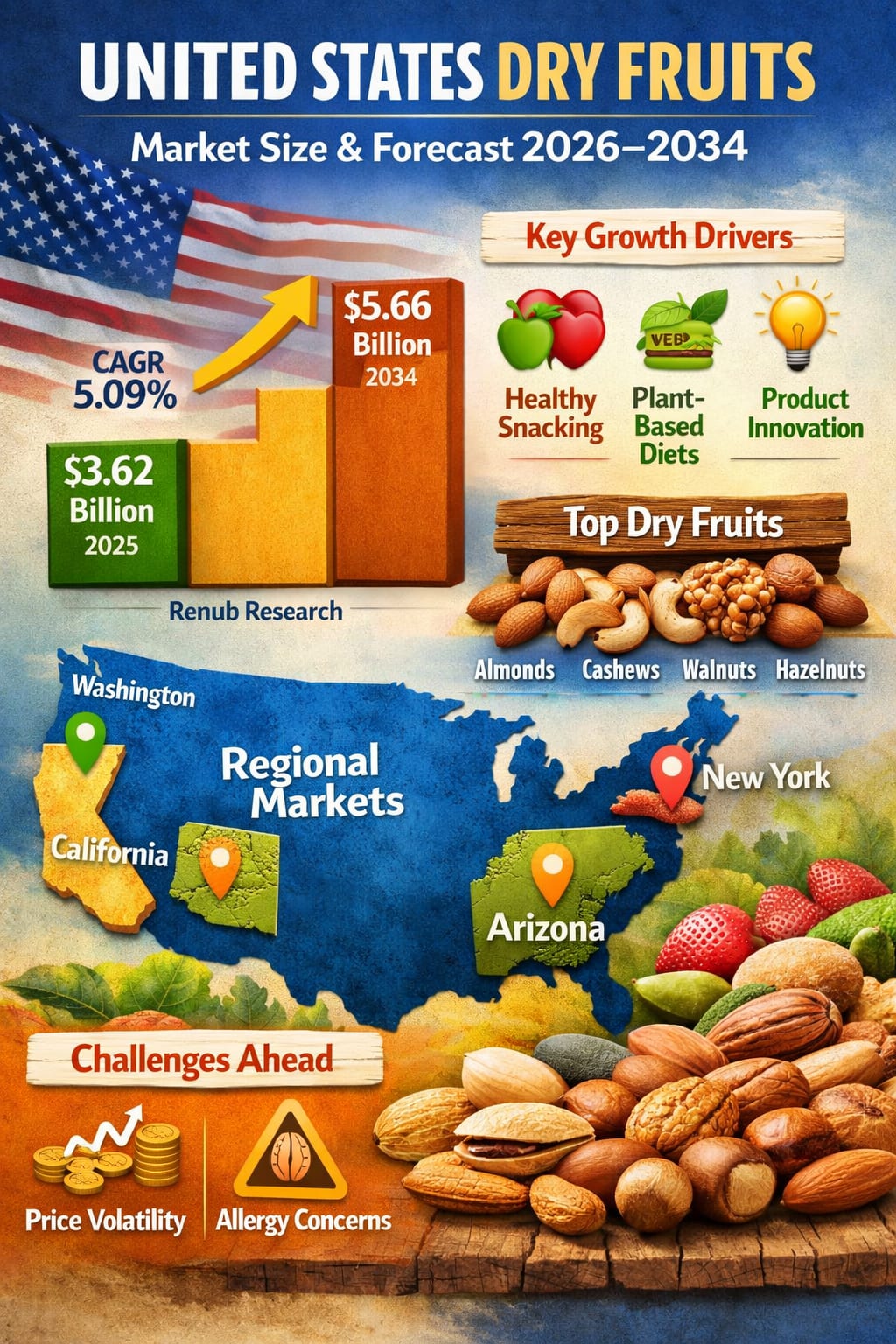
The United States Dry Fruits Market is entering a sustained growth phase, driven by evolving dietary patterns, heightened health awareness, and product innovation. According to Renub Research, the market is projected to grow from US$ 3.62 billion in 2025 to US$ 5.66 billion by 2034, expanding at a Compound Annual Growth Rate (CAGR) of 5.09% from 2026 to 2034.
This growth is not accidental. It reflects structural shifts in American food consumption—where functional nutrition, plant-based diets, clean labels, and convenient snacking converge. From breakfast cereals and protein bars to vegan desserts and premium snack packs, dry fruits are no longer seasonal or occasional indulgences; they are everyday essentials.
Market Outlook: From Pantry Staple to Functional Superfood
Dry fruits are fruits that have had most of their moisture removed either through sun drying or modern dehydration techniques. Popular varieties include almonds, cashews, walnuts, pistachios, raisins, dates, figs, apricots, pecans, macadamias, and more.
What makes them powerful is their nutrient density. Dry fruits offer concentrated levels of:
Healthy fats
Dietary fiber
Essential minerals
Plant protein
Antioxidants
Vitamins such as Vitamin E
In the United States, dry fruits have transitioned from festive or specialty consumption to daily nutrition. They are widely consumed:
As on-the-go snacks
In cereal and yogurt toppings
In baking and confectionery
In energy bars and trail mixes
In plant-based dairy alternatives
In functional and fortified foods
As Americans increasingly prioritize heart health, digestive wellness, weight management, and clean eating, dry fruits have found a central place in mainstream dietary habits.
Key Growth Drivers in the United States Dry Fruits Market
1. Rising Health Consciousness and Demand for Nutritious Snacks
The American consumer is more informed than ever. Rising concerns around obesity, diabetes, cardiovascular diseases, and lifestyle disorders have pushed consumers to move away from highly processed snacks toward nutrient-rich alternatives.
Dry fruits are viewed as:
Natural
Minimally processed
Free from artificial additives
High in fiber and healthy fats
Suitable for regular consumption
Their portability and long shelf life make them ideal for busy professionals, students, and fitness enthusiasts.
Product innovation is also accelerating consumer interest. For example, in March 2024, Brothers All Natural launched its Infused Fruit Crisps at Natural Products Expo West in Anaheim, combining Fuji apples with raspberry, blueberry, and strawberry juices. Such launches reflect how brands are redefining traditional dried fruit into modern snack experiences.
2. Expansion of Plant-Based, Vegan, and Functional Diets
The rapid adoption of plant-based, vegan, and flexitarian diets across the United States is a major growth catalyst.
Dry fruits serve as:
Plant-based protein sources
Dairy alternatives (almond milk, cashew cream)
Core ingredients in vegan baking
Additions to gluten-free and keto diets
Components in heart-healthy meal plans
They are integral to the rise of clean-label and functional foods. Snack manufacturers increasingly incorporate dry fruits into granola, fortified cereals, energy bars, and specialty diet products.
In January 2025, Döhler collaborated with The Perfect Pureé to launch freeze-dried fruits under the Tastecraft brand in North America—further expanding dry fruit presence in the foodservice industry.
3. Premiumization and Retail Expansion
Dry fruits are evolving from commodity products to premium lifestyle offerings.
Consumers now demand:
Organic certifications
Non-GMO labeling
Sustainable sourcing
Resealable and portion-controlled packaging
Flavored and roasted variants
Retail expansion across supermarkets, specialty health stores, club stores, and e-commerce platforms has significantly enhanced accessibility.
In April 2025, Univision Foods transitioned from B2B to B2C with the launch of its brands Tauffa and Nut N Berry, signaling the growing competitiveness and branding focus in the segment.
Subscription-based bulk purchases and online grocery growth further strengthen long-term market expansion.
Challenges Facing the U.S. Dry Fruits Market
Price Volatility and Supply Chain Risks
Dry fruits depend heavily on agricultural output. Climate change, droughts, irregular rainfall, and heatwaves directly impact production—especially for tree nuts.
Moreover, several varieties such as cashews, Brazil nuts, and certain dried fruits rely on imports. Currency fluctuations, trade policies, and transportation disruptions can influence pricing and supply.
This volatility may affect consumer purchasing decisions, particularly in price-sensitive segments.
Allergies and Overconsumption Concerns
Tree nut allergies remain prevalent in the U.S., limiting consumption among certain population groups.
Additionally, dry fruits are calorie-dense. Overconsumption without portion control may lead to weight gain, especially among consumers unaware of serving size guidelines.
Segment Insights: Leading Dry Fruits in the U.S.
United States Almond Market
The U.S. dominates global almond production, particularly in California. Almonds are widely consumed in:
Snacks
Bakery products
Breakfast cereals
Almond milk
Plant protein formulations
High vitamin E content, heart health benefits, and strong domestic production give almonds a leading position in both consumption and export categories.
United States Hazelnuts Market
Hazelnuts are gaining popularity in premium confectionery, chocolates, spreads, and bakery applications.
Growing consumer interest in gourmet and indulgent foods supports steady demand. Their antioxidant properties and rich flavor profile strengthen their appeal in both retail and foodservice segments.
United States Walnuts Market
Walnuts are strongly associated with brain and heart health due to omega-3 fatty acids.
They are commonly used in:
Baked goods
Salads
Cereals
Functional snacks
The functional food movement continues to expand walnut consumption across age groups.
United States Cashew Market
Cashews are increasingly used in plant-based dairy substitutes such as:
Vegan cheeses
Cream sauces
Plant-based desserts
Although largely import-dependent, strong demand in ethnic cuisines and premium snack segments sustains consistent growth.
Regional Insights
California
California is the backbone of the U.S. dry fruits industry. As a leading producer of almonds, walnuts, pistachios, and raisins, the state benefits from:
Strong agricultural infrastructure
Export-oriented production
High consumer health awareness
Mature food processing ecosystem
The innovation-driven food culture further enhances product development and premium positioning.
New York
New York’s dense population and multicultural dietary habits drive strong demand for dry fruits in:
Breakfast items
Bakeries
Cafes
Salads
Though not a major producer, efficient import logistics and foodservice demand sustain growth.
Washington
Washington consumers show a preference for organic and natural foods. Cooperative markets and specialty stores contribute to strong retail penetration of dry fruits.
Arizona
Arizona’s outdoor lifestyle culture supports trail mix and portable snack consumption. Growing retiree populations and health-conscious households further stimulate demand.
Market Segmentation Overview
By Types:
Almonds, Hazelnuts, Pecans, Pistachios, Walnuts, Macadamias, Brazil Nut, Cashew, Pine Nuts, Peanuts, Dates, Dried Apricot, Sweetened Dried Cranberry, Dried Fig, Dried Grape, Prune
By Consumption:
Almonds, Hazelnuts, Pecans, Pistachios, Walnuts, Brazil Nut, Cashew, Pine Nuts, Peanuts, Dates, Dried Apricot, Sweetened Dried Cranberry, Dried Fig, Dried Grape, Prune
By Production:
Almonds, Hazelnuts, Pecans, Pistachios, Walnuts, Macadamias
By Trade (Import/Export):
Imports include almonds, cashews, Brazil nuts, dates, and others
Exports are dominated by almonds, walnuts, pistachios, and pecans
Top States:
California, Texas, New York, Florida, Illinois, Pennsylvania, Ohio, Georgia, New Jersey, Washington, North Carolina, Massachusetts, Virginia, Michigan, Maryland, Colorado, Tennessee, Indiana, Arizona, Minnesota, Wisconsin, Missouri, Connecticut, South Carolina, Oregon, Louisiana, Alabama, Kentucky, Rest of United States
Competitive Landscape
The market features both domestic producers and global suppliers. Key companies include:
Sunbeam Foods
Sun-Maid Growers of California
Al Foah
Bergin Fruit and Nut Company
Angas Park
Murray River Organics Group
Red River Foods
Geobres
Kiantama Oy
Sunsweet
Traina Foods
These companies focus on quality sourcing, organic certifications, value-added packaging, and international trade expansion to maintain competitive positioning.
Future Outlook: What Lies Ahead?
Between 2026 and 2034, the U.S. dry fruits market is expected to remain on a steady upward trajectory. Growth will be shaped by:
Increased adoption of plant-based diets
Expansion of e-commerce grocery channels
Functional food innovations
Sustainability-driven sourcing
Rising exports of American almonds and walnuts
However, managing supply chain risks and climate-related disruptions will be critical for long-term stability.
With a projected valuation of US$ 5.66 billion by 2034, the United States Dry Fruits Market reflects a broader transformation in consumer food priorities—where nutrition, convenience, and sustainability intersect.
Final Thoughts
The story of the U.S. dry fruits market is not just about almonds or raisins—it is about a national shift toward smarter eating habits. As Americans increasingly seek natural energy sources, plant-based proteins, and functional wellness ingredients, dry fruits are perfectly positioned to meet these demands.
From California orchards to New York bakeries, from online subscriptions to premium snack aisles, dry fruits are becoming symbols of conscious consumption.
With steady CAGR growth of 5.09% through 2034, the industry’s trajectory signals resilience, innovation, and enduring consumer trust.
About the Creator
Worth the Wait: Puerto Viejo, Costa Rica
Beach bumming in a small Caribbean beach town sounded like a perfect way to end our 6-month trip through Mexico and Central America. Or so we thought. The foul, fishy stench of rotten seaweed hit our nostrils as we stepped from the cramped bus and looked out at a rather depressing, empty, and underwhelming black sand beach. It was pouring with rain, and we had to quickly fish out our ponchos. We thought, this couldn’t be it, could it?
By Sh*t Happens - Lost Girl Travel7 days ago in Wander




Comments
There are no comments for this story
Be the first to respond and start the conversation.