Marcus Hedare
Bio
Hello, I am Marcus Hedare, host of The Metaphysical Emporium, a YouTube channel that talks about metaphysical, occult and esoteric topics.
https://linktr.ee/metaphysicalemporium
Stories (76)
Filter by community
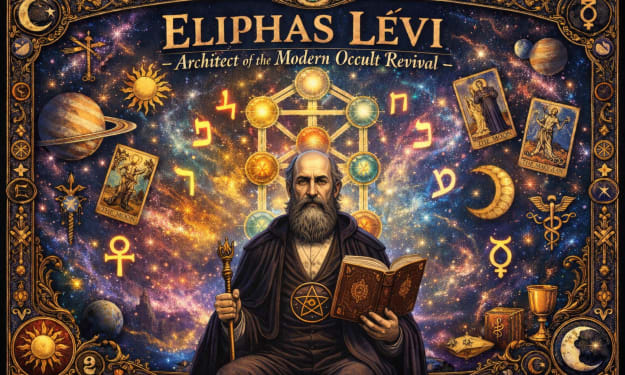
Eliphas Levi. Content Warning.
The Reconstruction of Western Esoteric Thought Nineteenth century France stood at a volatile intersection of political transformation, technological advancement, and intellectual reorientation. The aftermath of the French Revolution continued to reshape social hierarchy, while industrial expansion accelerated urban growth and altered labor structures. Scientific innovation challenged established religious doctrine and traditional metaphysical frameworks. Within this environment of ideological confrontation and spiritual searching, Alphonse Louis Constant, later recognized under the adopted name Eliphas Levi, emerged as a central architect in the revival and reinterpretation of Western esoteric philosophy.
By Marcus Hedare30 days ago in BookClub
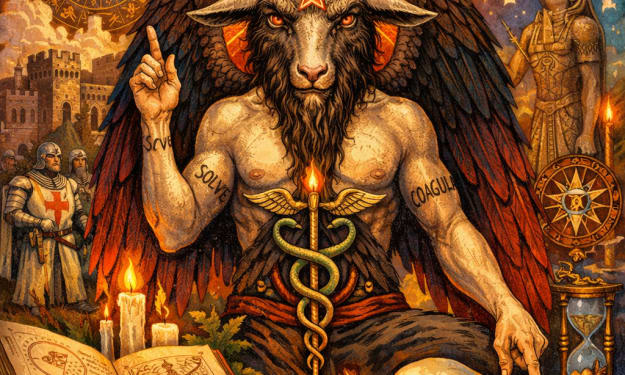
The Baphomet. Content Warning.
Symbol, Accusation, and Esoteric Transformation Few figures within Western esoteric history generate sustained fascination, controversy, reverence, suspicion, and scholarly debate equal to Baphomet. Documentary evidence traces the earliest known appearances of the name to the early fourteenth century during inquisitorial proceedings against members of the Knights Templar. Records from the trials between 1307 and 1312 include testimonies alleging ritual veneration of a mysterious head or idol identified under variations of the name Baphomet. Surviving trial transcripts remain inconsistent and often emerged under coercive interrogation, leaving historians divided regarding literal worship, political fabrication, or linguistic corruption of other religious terminology, including possible distortions of the name Muhammad circulating through Crusader era rhetoric.
By Marcus Hedareabout a month ago in BookClub
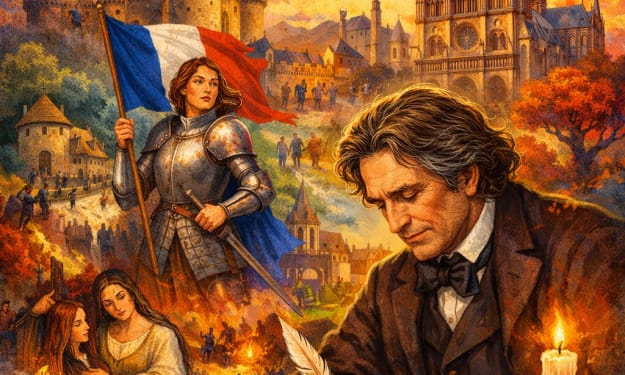
Jules Michelet. Content Warning.
Champion of the People in History Jules Michelet, born August 21, 1798, in Paris, and passing on February 9, 1874, in Hyères, occupies a foundational place in the evolution of modern historiography. Rejecting the rigid focus on kings, political elites, and institutional records that dominated historical writing in the early 19th century, Michelet shifted attention to the lived realities of ordinary people, elevating their struggles, triumphs, and collective spirit into the core of historical narrative. His work presents history as a dynamic interplay of social forces, cultural practices, and human emotion, transforming the study of the past from static chronicles into a vivid, human-centered experience.
By Marcus Hedareabout a month ago in BookClub
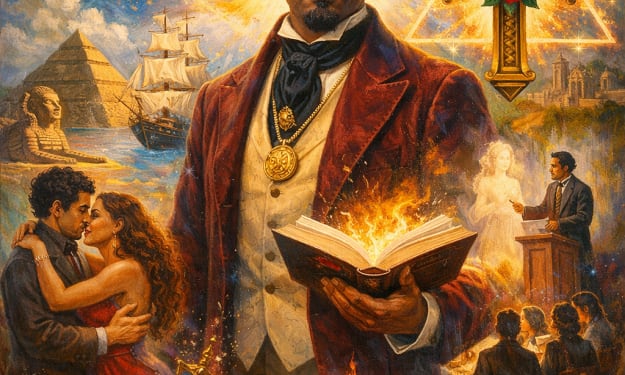
Paschal Beverly Randolph. Content Warning.
The Revolutionary Path of Paschal Beverly Randolph A life forged along the edges of social orthodoxy and spiritual experimentation can illuminate overlooked intersections of culture, metaphysics, and social evolution. Nineteenth century America sustained rigid racial stratification, institutional religious authority, and restrictive moral expectations governing intimacy, gender roles, and personal agency. Within such an environment, Paschal Beverly Randolph rose as an intellectual and esoteric pioneer whose work unsettled dominant assumptions surrounding spirituality, human relationships, and self-determination. Historical records place Randolph among the earliest American occult philosophers to integrate Western esotericism, Spiritualist practice, medical speculation, and radical social commentary into a unified philosophical system.
By Marcus Hedareabout a month ago in BookClub
Erotic Occultism. Content Warning.
The Sacred Charge of Desire Erotic occultism occupies a complex space where sexuality, mysticism, ritual practice, and cultural taboo converge. Throughout recorded history, human societies have wrestled with the meaning of desire, often regarding it as far more than physical impulse. Within numerous esoteric and spiritual traditions, erotic energy has been understood as a vital force capable of shaping consciousness, deepening ritual experience, and altering perception. Rather than existing solely within the realm of pleasure, it has frequently been treated as a powerful medium through which individuals attempt to engage with unseen realities.
By Marcus Hedareabout a month ago in BookClub
Rosicrucianism Revealed. Content Warning.
The Enigmatic Rise of Rosicrucian Thought Rosicrucianism stands among the most compelling currents in Western esoteric history. The tradition occupies a distinctive position at the intersection of mysticism, philosophical speculation, symbolic language, and spiritual inquiry. Interest in Rosicrucianism has persisted for more than four centuries, fueled by cryptic manifestos, elaborate allegories, and a reputation for concealed wisdom transmitted through select circles of initiates. References to hidden brotherhoods, alchemical transformation, and spiritual illumination continue to attract scholars, historians of religion, and students of Western occult traditions.
By Marcus Hedareabout a month ago in BookClub
The Sacred Art of Commanding the Divine. Content Warning.
Thrones, Temples, and the Architecture of Sacred Power Religious witches, frequently identified within historical records as ceremonial witches, occupy a layered and often misrepresented position within the spiritual development of Western and Near Eastern traditions. Ceremonial witchcraft arose from environments shaped by literacy, theology, philosophy, and institutional religion rather than exclusively from village survival practices or oral folk medicine. Temples, monastic scriptoria, royal courts, scholarly academies, and esoteric fraternities served as incubators for ritual systems that required formal education, linguistic precision, and theological fluency. Sacred alphabets, mathematical symbolism, planetary correspondences, angelic hierarchies, consecrated tools, and carefully calculated ritual timing formed a structured framework through which ceremonial practitioners attempted contact with divine or intermediary intelligences.
By Marcus Hedareabout a month ago in BookClub
Ida Craddock. Content Warning.
The Crime of Speaking Clearly Certain historical figures disappear through intentional removal rather than neglect. Ida C. Craddock encountered sustained opposition after challenging powerful cultural institutions. Educational work produced by Craddock confronted sexual ignorance promoted as moral discipline, questioned religious leadership separated from lived human experience, and exposed legal systems willing to criminalize sexual education. Cultural resistance intensified during the late nineteenth and early twentieth centuries, an era defined by rigid public morality and aggressive censorship.
By Marcus Hedareabout a month ago in BookClub
Maria de Naglowska. Content Warning.
The Forbidden Mysticism of Maria de Naglowska Maria de Naglowska occupies one of the most enigmatic positions in modern occult history. At the intersection of mysticism, sexuality, and ritual, her work confronted social and spiritual conventions with intensity and purpose. Within the early twentieth century, a period marked by cultural upheaval and experimentation, erotic experience became a medium for metaphysical insight and personal transformation, challenging entrenched notions of morality, divinity, and human potential.
By Marcus Hedareabout a month ago in BookClub
Austin Osman Spare: . Content Warning.
A Maverick of Vision and Magic Few figures in the history of art and mysticism stand as distinctly as Austin Osman Spare. Born in London in 1886, at the close of the Victorian era, Spare entered a world caught between rigid social order and a fascination with the unseen. From a young age, his drawings displayed extraordinary skill and imagination, revealing an ability to render internal visions with a precision and intensity rarely seen in an artist so young. These early works conveyed both beauty and unease, hinting at an innate understanding of the subconscious mind and its symbolic potential.
By Marcus Hedareabout a month ago in BookClub
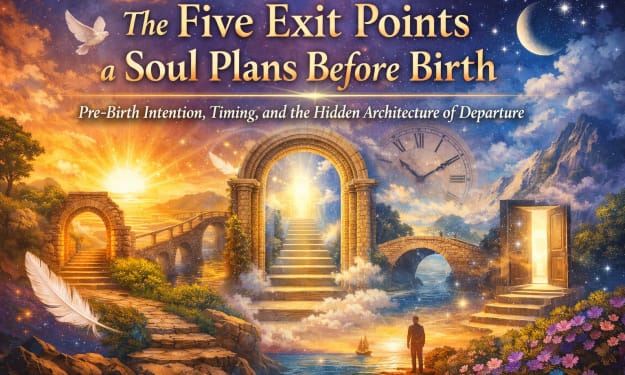
The Five Exit Points a Soul Plans Before Birth. Content Warning.
The Architecture of Arrival and Departure Across civilizations separated by geography and century, a striking continuity appears in spiritual philosophy and metaphysical inquiry. Consciousness enters physical form through deliberate structure rather than accident. Birth is framed not as a blind beginning, but as a negotiated crossing shaped by intention, memory, and limitation. Ancient thinkers described embodiment as a descent through layers of awareness, each layer narrowing perception while preserving essential purpose. Within that descent, departure was never absent from consideration.
By Marcus Hedareabout a month ago in BookClub
Kabbalah and the Architecture of Sacred Power. Content Warning.
Kabbalah and the Architecture of Sacred Reality Within the broad terrain of Western esotericism, Kabbalah stands apart for both intellectual rigor and historical endurance. Emerging from medieval Jewish theological inquiry, Kabbalah matured into a sophisticated metaphysical framework that addresses creation, consciousness, and the relationship between the infinite and the manifest world. Rather than functioning as a single scripture or closed doctrine, Kabbalah developed as an evolving body of commentaries, symbolic diagrams, meditative disciplines, and speculative theology. Central to this tradition lies a radical cosmological model in which divine reality unfolds through ordered stages of emanation, forming a structured universe that mirrors spiritual principles at every level of existence.
By Marcus Hedareabout a month ago in BookClub