Latest Stories
Most recently published stories in Chapters.
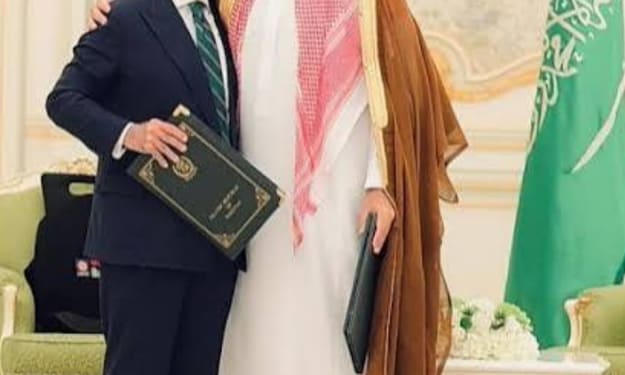
Pakistan's defense agreement with Saudi Arabia, will Pakistan remain neutral in a war between Iran and Saudi Arabia?
The scope of attacks that began on February 28, 2026, between the United States, Israel, and Iran has expanded into a regional war, raising questions about Pakistan’s foreign policy as well as its defense agreement with Saudi Arabia.
By Real content10 days ago in Chapters
Moses Fleetwood Walker
Until Jackie Robinson joined the Brooklyn Dodgers in 1947 March 6, 2026 —Leavie scott Long before Jackie Robinson became a household name in 1947, another pioneering athlete stepped onto the field and challenged the deeply entrenched racial barriers of his era. His name was Moses Fleetwood “Fleet” Walker (1856–1924), and although history remembers him primarily as one of the earliest Black athletes to play in professional Major League Baseball, his extraordinary life story stretches far beyond the diamond.
By TREYTON SCOTT10 days ago in Chapters
Sarah Boone
Her design was patented in 1892 By Staff Reporter March 6, 2026 —Leavie Scott In the late 19th century, when American households were rapidly transforming under the weight of industrial growth and changing fashion, an inventor from Connecticut quietly reshaped one of the most common domestic tools in history: the ironing board. Her name was Sarah Boone (1847–1904), and her innovative design would become the blueprint for the ironing boards still used around the world today.
By TREYTON SCOTT10 days ago in Chapters
Tattoos and Rail Guns Chapter 19: Cavetown Orphans and Water Usage
Kev and the two lieutenants had been following the cavern for a few miles. The cavern may have been natural but had been reinforced over time. The supports were ramshackle at best but seemed to be doing the job. They did seem to be a little dustier than a cavern should be; there was no visible water either, which was weird considering that the cavern was obviously caused by erosion.
By Jamais Jochim10 days ago in Chapters
How Small Businesses Can Master Financial Management
Mastering financial management is one of the most important responsibilities for small business owners, yet it is also one of the most challenging. Many entrepreneurs start with strong ideas and high motivation, but long-term success depends on building financial systems that support stability, growth, and confident decision-making.
By Michael Kazma10 days ago in Chapters
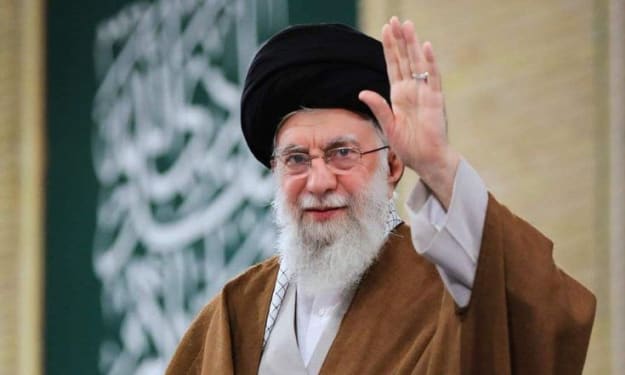
The Life and Leadership of Ayatollah Ali Khamenei
Ayatollah Seyyed Ali Hosseini Khamenei’s story begins in Mashhad, one of Iran’s holiest cities, where he was born on July 17, 1939 into a deeply religious family. His father, Ayatollah Seyyed Javad Khamenei, was a respected cleric of Azerbaijani origin, known for his strict scholarship and modest lifestyle. His mother, a devout woman from a clerical family, raised her children in an environment where faith, discipline, and humility were woven into daily life. Growing up in a small home with limited means, young Ali spent his childhood surrounded by religious texts, sermons, and the rhythms of Islamic scholarship. His father insisted on a traditional religious education, and by his teenage years, Ali was already immersed in the study of Quranic interpretation, jurisprudence, and philosophy. Early Education and the Seeds of Rebellion In the 1950s, Khamenei continued his studies in the seminaries of Mashhad and later Najaf, one of the most important centers of Shia learning. But his education was not limited to theology. He was drawn to political writings, anti-imperialist ideas, and the growing movement against the Shah of Iran. By the early 1960s, he had become a follower of Ayatollah Ruhollah Khomeini, whose fiery opposition to the Shah inspired a generation of young clerics. Khamenei began giving speeches, distributing pamphlets, and organizing underground networks. His activism led to multiple arrests, interrogations, and periods of exile under the Shah’s regime. These years hardened him. They shaped his belief that political power and religious authority were inseparable—and that Iran needed a system where clerics guided the nation. The 1979 Revolution and the Rise of a New Leader When the Iranian Revolution erupted in 1979, Khamenei was no longer a young student—he was a seasoned activist. After the Shah fell and the Islamic Republic was established, he quickly rose through the ranks: - Member of the Assembly of Experts - Tehran’s Friday Prayer Leader - Deputy Minister of Defense - A key figure in the Islamic Revolutionary Guard Corps (IRGC) In 1981, after the assassination of President Mohammad-Ali Rajai, Khamenei became the President of Iran, serving two terms until 1989. He was known for his calm demeanor, loyalty to Khomeini, and ability to navigate political factions during the turbulent years of the Iran–Iraq War. Supreme Leader: An Unexpected Successor When Ayatollah Khomeini died in 1989, Iran needed a new Supreme Leader. Many clerics doubted Khamenei—he was younger, less senior in religious rank, and not considered a grand ayatollah. But he was trusted, politically experienced, and deeply loyal to the revolution. The Assembly of Experts elected him as the Second Supreme Leader of Iran, a position he would hold for 36 years, making him one of the longest-ruling leaders in the modern Middle East. A Rule Defined by Power, Conflict, and Control Khamenei’s leadership reshaped Iran’s political landscape. Under his rule: - The IRGC became the most powerful military and economic force in Iran. - Iran expanded its influence across the Middle East through proxy groups. - Domestic dissent was tightly controlled. - The nuclear program became a central pillar of Iran’s strategy. Supporters saw him as a guardian of Iran’s independence and Islamic identity. Critics saw him as an authoritarian figure who consolidated power and suppressed opposition. His leadership style was marked by caution, ideological rigidity, and a belief that Iran must resist Western influence at all costs. The Final Chapter In February 2026, Ayatollah Ali Khamenei was killed at age 86 during U.S.–Israeli airstrikes targeting his compound in Tehran, marking the end of an era that had defined Iran for nearly four decades. His death was confirmed by Iranian state media and global news outlets. His passing left Iran at a crossroads, with an interim leadership council stepping in as the nation faced uncertainty about its future. Legacy of a Controversial Figure Ayatollah Ali Khamenei leaves behind a legacy that is complex and deeply debated: - To some, he was a defender of Iran’s sovereignty and Islamic values. - To others, he was a symbol of repression and authoritarian rule. - To historians, he was one of the most influential—and polarizing—leaders of the 21st century. But beyond politics, his story is also the story of a boy from Mashhad, raised by a humble cleric father, shaped by faith, revolution, and the belief that he was destined to guide his nation.
By Haroon Pasha11 days ago in Chapters
How has the Israel-US war with Iran affected air travel?
On February 28, Israel and the United States launched a coordinated military operation against Iran, killing Supreme Leader Ali Khamenei. Since then, the conflict has rapidly expanded and affected multiple countries.
By Real content11 days ago in Chapters