book reviews
Book reviews for scholastic growth; read material from the world's top educators with our collection of novels, memoirs, biographies, philosophical texts and textbooks.
The Protection-of-Innocence Reciprocity Doctrine. AI-Generated.
Core Moral Premise The highest duty of any legitimate social order is the protection of innocent life. Innocent life has absolute moral primacy. Any system that systematically insulates predators, tolerates predatory asymmetry, rewards hypocrisy, or allows aggressors to retain insulation has inverted its purpose and forfeited legitimacy. Truth, justice, reciprocity, humility, mercy, forgiveness, and vertical accountability are structural necessities rather than optional virtues. Vertical accountability means recognition of and submission to a moral law higher than oneself. Authority must flow toward those who most consistently demonstrate sustained competence in moral and epistemic discipline. This competence is shown through observable conduct and trajectory over time, not through doctrinal label, tribal identity, credential alone, or self-profession.
By Peter Thwing - Host of the FST Podcast21 days ago in Education
How Billy Blanks Revolutionized Modern Fitness
Few fitness movements have left as lasting an impact as Tae Bo, the explosive, music‑driven workout program developed by martial artist and trainer Billy Blanks. First introduced in the late 1970s, Tae Bo spent years quietly evolving before ultimately exploding into mainstream culture during the 1990s. Its rise wasn’t accidental—Tae Bo unified the discipline of martial arts with the dynamic rhythm of aerobics, creating a high‑intensity training system that reshaped what people expected from group fitness.
By TREYTON SCOTT21 days ago in Education
The Teacher Who Won $1 Million for Turning India’s Slums into Open-Air Classrooms. AI-Generated.
An innovative Indian educator has captured global attention after winning a $1 million international teaching award for transforming some of India’s most underprivileged neighborhoods into open-air classrooms. Ranjitsinh Disale, a primary school teacher from Maharashtra, was recognized for his pioneering efforts to bring education directly into slum communities where poverty, migration, and social barriers had kept thousands of children out of school. Disale received the prestigious Global Teacher Prize, honoring educators who demonstrate exceptional impact and innovation. His work has been praised for blending community engagement, digital learning, and grassroots problem-solving to tackle long-standing educational inequality. Classrooms Without Walls In areas where schools were distant or overcrowded, Disale created outdoor learning spaces in narrow lanes, open fields, and community courtyards. Armed with portable teaching materials and a smartphone, he conducted lessons for children who could not attend formal schools due to family obligations or lack of documentation. “These children were invisible to the system,” Disale said during the award ceremony. “So I decided to make the system visible to them by bringing education to their doorstep.” His approach focused on flexibility. Lessons were scheduled around work hours for children who helped their families earn a living, and teaching methods were adapted for multilingual communities. Simple tools such as digital QR codes linked students to video lessons and reading materials, allowing them to continue learning even when teachers were not physically present. Breaking Social Barriers One of the most remarkable aspects of Disale’s work has been his success in encouraging girls’ education in conservative and marginalized communities. In regions where early marriage and social restrictions prevented girls from attending school, he negotiated directly with families and community leaders. Through awareness campaigns and community meetings, he demonstrated how education could improve health, income, and long-term security. As a result, enrollment among girls in his target areas rose dramatically, and several villages reported zero dropouts for multiple years. Local parents said the teacher’s dedication changed their perception of schooling. “We used to think education was not for our children,” one mother explained. “Now we see it as their future.” Technology as an Equalizer Disale’s model relies heavily on low-cost technology. He developed QR-coded textbooks that allowed students to scan pages using basic mobile phones and access recorded lessons. This proved especially useful during the COVID-19 pandemic, when schools across India were shut for months. By combining outdoor teaching with digital content, he ensured learning continuity even in the absence of classrooms. Education officials have since explored scaling his methods to other regions with limited infrastructure. Global Recognition The Global Teacher Prize jury praised Disale for “turning obstacles into opportunities” and for creating an education system that works beyond traditional school walls. Judges highlighted the sustainability of his methods and their potential to be replicated in slums and remote areas worldwide. Education experts say his achievement sends a powerful message about the role of teachers in social transformation. “This is not just about one classroom,” said an education policy analyst. “It’s about reimagining how and where education can happen.” Impact Beyond the Prize Disale has pledged to use a significant portion of his prize money to expand his initiatives and fund educational programs for disadvantaged children. He has also committed to sharing his teaching techniques with educators across India and abroad through workshops and online platforms. Rather than viewing the award as a personal triumph, he described it as recognition of teachers everywhere who work in difficult conditions. “This prize belongs to every teacher who refuses to give up on a child,” he said. A Model for the Future As India continues to grapple with educational inequality, Disale’s work offers a blueprint for community-based solutions. His open-air classrooms demonstrate that education does not require expensive buildings, only commitment, creativity, and trust from the community. In turning slums into spaces of learning, Ranjitsinh Disale has shown that innovation can flourish even in the most challenging environments. His story is a reminder that sometimes the most powerful classrooms are not enclosed by walls, but by hope.
By Fiaz Ahmed 22 days ago in Education
William Harry Barnes
Byline: LEAVIE SCOTT Dateline: February 19, 2026 In the bustling corridors of early‑20th‑century American hospitals—long before advanced imaging systems, computerized surgical instruments, or modern endoscopic tools—stood a physician whose ingenuity quietly shifted the boundaries of what medical professionals could do. Dr. William Harry Barnes (1887–1945), an accomplished ENT (Ear, Nose, and Throat) specialist at Frederick Douglass Hospital in Philadelphia, was one of those rare individuals whose curiosity and craftsmanship converged in perfect alignment. His invention, the hypophysoscope, gave doctors a safer and more accessible way to reach one of the most vital, yet deeply hidden structures of the human body: the pituitary gland.
By TREYTON SCOTT22 days ago in Education
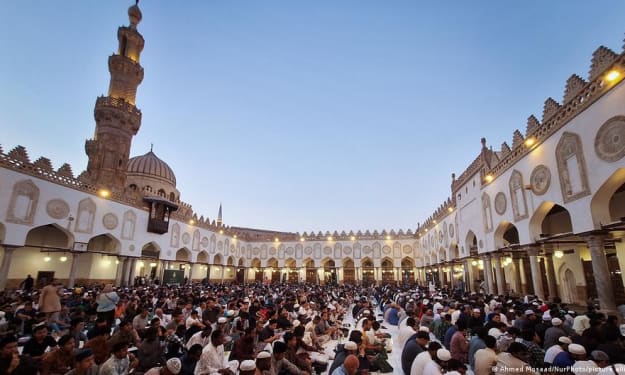
Ramadan 2026: Dates, Moon Sighting & Timetable (Feb 18)
Ramadan 2026: Complete Guide to the Holy Month - Dates, Moon Sighting & Global Timetables The blessed month of Ramadan 2026 is approaching, bringing with it a time of spiritual reflection, fasting, and community for Muslims worldwide. As followers prepare for this sacred observance, understanding when Ramadan starts, how the moon is sighted, and what to expect during this holy month becomes essential for proper preparation.
By Zayn Naseer23 days ago in Education
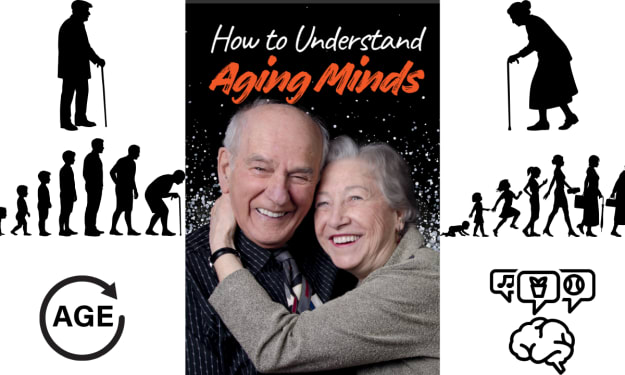
How to Understand Aging Minds: A Practical Guide to Cognitive Changes, Emotional Well-Being and Personality . AI-Generated.
Aging is one of the most natural and universal experiences of human life—yet it remains one of the least understood. As bodies change with time, so do minds. Memory may shift. Emotions may deepen or become more sensitive. Personality traits may soften, strengthen, or reveal new layers. These changes are not signs of decline alone; they are part of a complex psychological evolution that deserves understanding, respect, and compassion.
By Akash Mano25 days ago in Education
The Victorian Aristocrat Who Became First British Muslim Lord. AI-Generated.
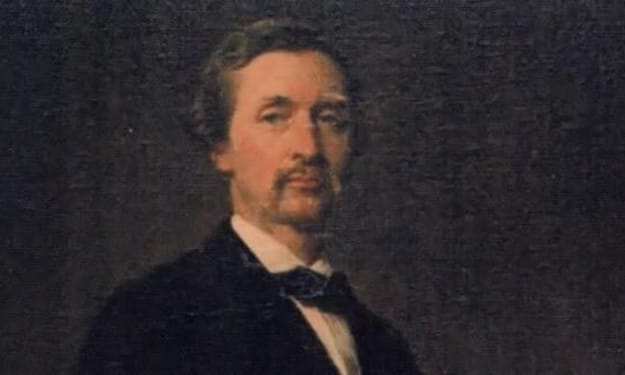
In a remarkable chapter of British history, a Victorian-era aristocrat emerged as the first British Muslim to take a seat in the House of Lords, bridging the worlds of tradition, religion, and politics. Lord Rowland Hill, born into an elite family with deep roots in the British peerage, converted to Islam during a period of personal exploration, leaving a lasting legacy on the cultural and political landscape of the United Kingdom. A Life of Privilege and Curiosity Lord Rowland Hill grew up in the late 19th century surrounded by wealth, influence, and the privileges of the British aristocracy. Educated at prestigious institutions, he was expected to follow a conventional path of military service, estate management, and parliamentary involvement. However, Hill’s curiosity about world cultures and religions set him apart from his peers. During his travels across the Middle East and South Asia, Hill became fascinated by Islamic philosophy, ethics, and scholarship. His exposure to Muslim societies, combined with personal study, led him to embrace Islam, a decision that shocked many in Victorian high society, where religious conformity and social convention were strictly observed. Conversion and Social Reaction Hill’s conversion to Islam was a highly unusual step for a member of the British aristocracy. In Victorian society, where Christianity dominated public life and social identity, religious conversion—particularly to a minority faith—was met with skepticism and, at times, outright hostility. Despite this, Hill remained committed to his faith while maintaining his public duties, demonstrating that spiritual conviction could coexist with civic responsibility. Contemporary newspapers documented Hill’s conversion with a mixture of curiosity and critique, often framing it as an eccentric but intriguing development in the aristocratic world. Scholars note that Hill’s embrace of Islam coincided with broader Victorian interests in Orientalism and cross-cultural exchange, although few of his contemporaries made such a profound personal commitment. Political and Cultural Impact Hill’s ascension to the House of Lords as a Muslim represented a groundbreaking moment in British history. While the role of the peerage was traditionally linked to inherited privilege and Christian identity, Hill’s presence signaled a shift toward inclusivity and the recognition of religious diversity. He participated in debates on education, foreign policy, and social welfare, often drawing on his understanding of Islamic principles to inform his contributions. Hill became a bridge between British institutions and the growing interest in Muslim cultures within Europe. His writings and speeches emphasized tolerance, ethical governance, and the importance of understanding other societies, laying a foundation for future engagement between British lawmakers and Muslim communities. Legacy and Recognition The legacy of Lord Rowland Hill extends beyond his parliamentary contributions. As the first British Muslim lord, he challenged stereotypes about aristocracy, religion, and governance, showing that faith and civic duty could intersect in meaningful ways. Modern historians cite his example when discussing the early presence of Islam within British political structures and the gradual recognition of religious diversity in public life. Hill’s life also inspired literary and cultural accounts, portraying him as a visionary figure who navigated complex social hierarchies while adhering to personal convictions. Exhibitions, academic studies, and museum collections occasionally highlight his life as an emblem of cross-cultural dialogue in Victorian Britain. Lessons from a Pioneering Life Hill’s story illustrates the power of individual agency in shaping societal norms. At a time when conformity was expected, he pursued both personal faith and public service, demonstrating courage, integrity, and intellectual openness. His journey offers insights into the ways minority religions could find a voice in British governance, paving the way for future generations of lawmakers from diverse backgrounds. As Britain continues to engage with questions of religious pluralism and multiculturalism, Lord Rowland Hill’s pioneering path serves as a reminder of the enduring potential for individuals to transform institutions from within, balancing tradition with innovation, and personal conviction with public responsibility.
By Fiaz Ahmed 26 days ago in Education
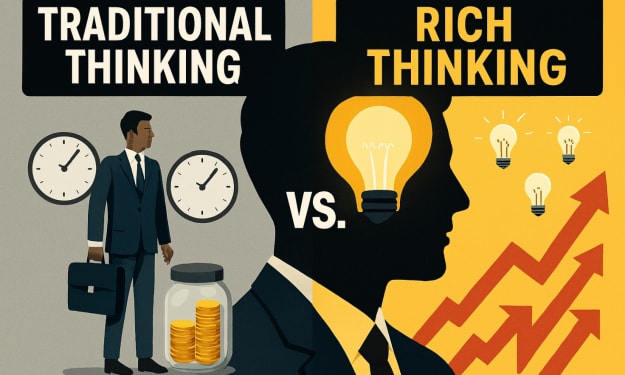
The Power of Perspective: Rich Thinking vsTraditional Thinking
The Power of Perspective: Rich Thinking vs. Traditional Thinking Success in life is often less about external circumstances and more about the mindset we adopt. Two dominant approaches to thinking—rich thinking and traditional thinking—illustrate how perspective shapes opportunities, decisions, and ultimately, outcomes. While traditional thinking emphasizes stability, caution, and conformity, rich thinking thrives on vision, risk-taking, and innovation. Understanding the differences between these two mental frameworks provides valuable insight into why some individuals achieve extraordinary success while others remain confined to predictable paths.
By Alhouci boumizzi28 days ago in Education