evolution
The evolution of science, science fiction, and mankind throughout the years.
Why Are We Hairless?
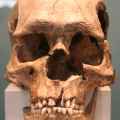
We are called the naked ape because we show more skin than any other primate. The gentleman in the picture appears hairless, but we know his hair has been removed for the shot. However, it may surprise you to know that we have just as many hair follicles as a chimpanzee. Our hair is just finer and much shorter. So why do we show so much more skin than any other primate?
By Monica Bennett8 years ago in Futurism
Language
So much has been written about speech and language, someone could open a library with no other topic. Some will argue that speech is different from language, but here they will be treated as one and the same. So much has been written about the FOXP2 gene lately, but language concerns more than just one gene. Since we now have the Neanderthal genome to work with, we know they also had FOXP2. Molecular techniques show the gene is older than Neanderthal, going back to at least 400,000 years ago. Did Neanderthal have language? The proof is presumptive. They lived in groups, hunted in teams, probably buried their dead, and new research shows they also made cave paintings. It seems unreasonable they did these things in relative silence. Both Stephen Jay Gould, the evolutionary biologist, and Noam Chomsky, the language guru, believed language was a side effect of a bigger brain. They believe language was not selected for, in the traditional Darwinian way, but occurred because of its association with a non-language gene. It happens that the FOXP2 is not only related to speech, but also digestion. If that is the gene that allowed for speech, then speech may be a side effect of its digestive function. Another gene related to language is CNTNAP2. Disruption in this gene is associated with both Autism and specific language impairment. Neanderthal did not have this gene, which produces a neurexin-family neural growth factor. They have to do with carrying impulses in the brain across the synapse between neurons. Language may also have been a side effect of either brain development or reorganization. The ability to gather ancient DNA may, in the future, supply answers to these questions.
By Monica Bennett8 years ago in Futurism
Humans Are Chaos
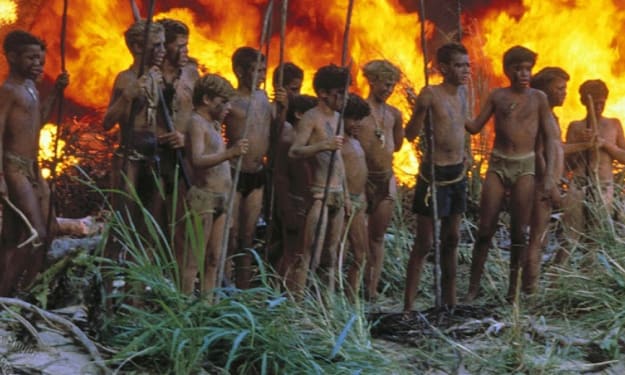
All humans are inherently evil. Science has proven time and time again that humans are born with many malevolent possibilities, even though not everyone may show it. Different factors, such as the way each human is raised and the environment they grow up in are what set the moral guidelines that suppress such evil. Although not everyone acts upon the darkness within, they are all born being capable of great destruction.
By Carolyn Hannigan8 years ago in Futurism
Advancements in Biotechnology
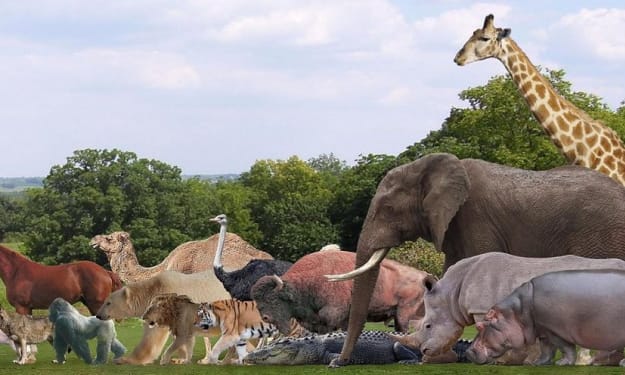
It is no secret that we have come a long way with technological advancements within our society. But now there are rumors of possibly bringing back extinct animals…could biotechnology be advanced enough today to complete such a task? Scientists think that it could be done. For those of you that do not know, extinction is when a species of animals dies off; like dinosaurs for instance… The passenger pigeon, the dodo, and the woolly mammoth are just a few of the species wiped off the Earth by changing environments and human activities. Could you imagine walking outside to find a woolly mammoth walking through your yard? The recent advances in biotechnology could enable bringing certain species back from the grave, but critics are arguing that the practice would only hinder conservation efforts by resurrecting creatures that could of course not survive in the wild that they are not used to.
By Alyssa Horn8 years ago in Futurism
The Perfection of Life
Technology is rapidly growing at an increased rate with every passing year. Computers are storing more memory, the internet is becoming faster and more widespread, graphics are getting ever more realistic, and robots are even being made to do tedious tasks of which we don’t want to do.
By Rebecca Sharrock9 years ago in Futurism