science
Topics and developments in science and medicine, presented by Futurism.
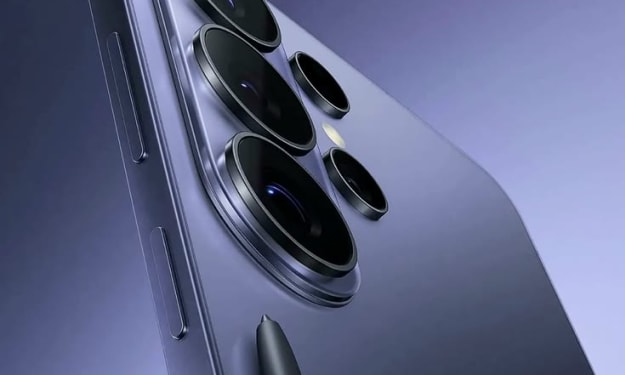
Samsung’s Satellite Strategy Just Upended the Market: Retroactive Support and A-Series Inclusion Leave Apple Scrambling
1. Introduction: The Long-Awaited Connection For years, the smartphone industry has treated satellite connectivity as a high-stakes arms race where Samsung was strangely absent. Apple ignited the trend in 2022 with the iPhone 14, and Google solidified it in 2024 with the Pixel 9 series. While its rivals dominated the headlines, Samsung remained uncharacteristically silent. From a strategic perspective, this delay wasn't a lack of innovation, but likely a calculated wait for 5G Non-Terrestrial Network (NTN) standards to mature and for carrier-satellite partnerships—like the T-Mobile and Starlink alliance—to reach critical mass.
By Mohammad Hamid13 days ago in Futurism
Is Starlink Available in Your Area? The Map, the Hype, and the Quiet Revolution Over Your Head
How Elon Musk’s satellite internet rollout is quietly rewriting who gets to be “connected” The first time my internet died in the middle of a job interview, I was standing on a chair, router in one hand, phone in the other, praying the signal would come back.
By abualyaanart15 days ago in Futurism
Euclid and the Precision Era of Dark Cosmology
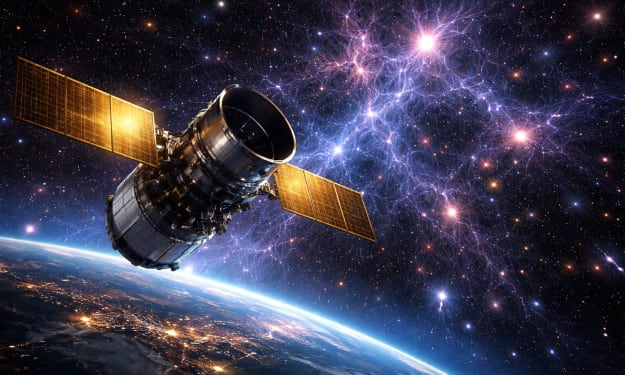
In 2023, the European Space Agency launched Euclid with a sharply defined objective: to map the geometry of the Universe and determine, with unprecedented precision, how dark matter and dark energy shape cosmic evolution. Rather than focusing on individual spectacular objects, Euclid operates as a large-scale cartographer. Its mission is statistical and structural. It surveys billions of galaxies across a third of the sky to reconstruct a three-dimensional map of the cosmic web stretching over 10 billion years of cosmic history.
By Holianyk Ihor17 days ago in Futurism
Launch and Scientific Impact of NASA’s Nancy Grace Roman Space Telescope (2026)
In 2026, NASA is preparing to launch one of the most ambitious space observatories of the decade: the Nancy Grace Roman Space Telescope. Designed to survey the universe at an unprecedented scale in near-infrared light, Roman is expected to reshape modern astrophysics by combining high resolution with an extraordinarily wide field of view. If the Hubble Space Telescope revealed the fine details of the cosmos, Roman will provide the panoramic context.
By Holianyk Ihor17 days ago in Futurism
Space Discoveries Powered by Machine Learning
Over the past decade, machine learning has evolved from a useful analytical tool into a central engine of discovery in astronomy. Modern observatories no longer produce manageable datasets measured in gigabytes—they generate petabytes of images, spectra, and time-series signals. Human analysis alone is no longer sufficient. In many areas of space research, algorithms now act as the first line of discovery.
By Holianyk Ihor18 days ago in Futurism
Exoplanets with Signs of Active Geology: Worlds That Refuse to Stay Still
For decades, exoplanets were little more than data points—subtle dips in starlight, faint radial velocity shifts, abstract entries in astronomical catalogs. Today, they are increasingly understood as dynamic worlds with atmospheres, climates, and in some cases, signs of active geology. For planetary science and astrobiology, that distinction is critical. A geologically active planet is not static. It has internal heat, material circulation, and potentially long-term environmental stability.
By Holianyk Ihor18 days ago in Futurism
A Hidden World Beneath the Salt: The Remarkable Discovery of a New Roundworm in Utah’s Great Salt Lake
Utah’s Great Salt Lake is one of the harshest environments on Earth. Its waters are several times saltier than the ocean, creating conditions that would kill most living creatures almost instantly. For years, scientists believed only a handful of hardy species—like brine shrimp and brine flies—could survive in its open waters. But in a groundbreaking find announced in early 2026, researchers uncovered something extraordinary: a tiny roundworm, a species entirely new to science, thriving in this extreme saltwater world.
By Mohammad Hamid19 days ago in Futurism
According to neuroscientists, this typical nightly ritual significantly enhances sleep.
It has been demonstrated that reading a book in bed improves sleep quality more than immediately turning out the lights. That straightforward practice simultaneously activates the systems of memory, language, and emotion, and that consistent concentration can facilitate the transition to sleep.
By Francis Dami19 days ago in Futurism
Alzheimer’s Disease, the Renin-Angiotensin System, and COVID-19
I. Alzheimer’s Disease: More Than Amyloid Alzheimer's disease has long been framed as a proteinopathy defined by extracellular β-amyloid plaques and intracellular tau tangles. While these remain central pathological hallmarks, the explanatory model of the disease has expanded considerably over the past two decades.
By Alain SUPPINI21 days ago in Futurism
Apple iPhone Manufacturing in Pakistan – A New Era for Local Technology Industry . AI-Generated.
Apple iPhone Manufacturing in Pakistan – A New Era for Local Technology Industry Introduction Pakistan’s technology and manufacturing sector is on the verge of a historic transformation. With global smartphone giant Apple planning to begin iPhone refurbishment and manufacturing operations in the country, the development signals a powerful shift in Pakistan’s role within the international electronics supply chain.
By Muhammad Abbas khan22 days ago in Futurism
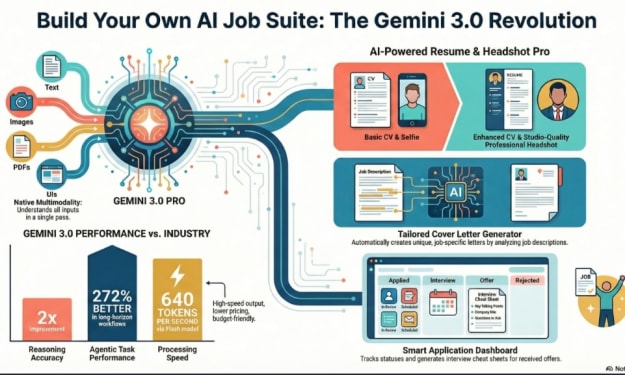
Stop Paying for SaaS: How Gemini 3.0 and ‘Five-Coding’ Are Changing the Solo-Builder Game. AI-Generated.
The Death of Subscription Fatigue In 2025, the professional landscape is drowning in "rented" software. We are currently suffering from acute SaaS fatigue, bleeding monthly fees for a fragmented stack of specialized tools: CV builders, application trackers, cover letter generators, and AI headshot services. This isn't just a budget drain; it’s a bottleneck to true productivity.
By Mohammad Hamid23 days ago in Futurism
How Fast Have Humans Really Accelerated Objects — and How Much Does Time Slow Down at Those Speeds?
Humanity has not yet built a starship that cruises at a significant fraction of the speed of light. However, we have accelerated certain objects to velocities so extreme that time itself measurably slows down. The answer to the question “What is the fastest object humans have ever accelerated?” depends on what we mean by “object.” For spacecraft, the numbers are impressive but not relativistic. For subatomic particles, the story becomes profoundly different.
By Holianyk Ihor24 days ago in Futurism