intellect
Insightful post about reason, abstract thinking, and science, highlighting gifted science fiction influencers.
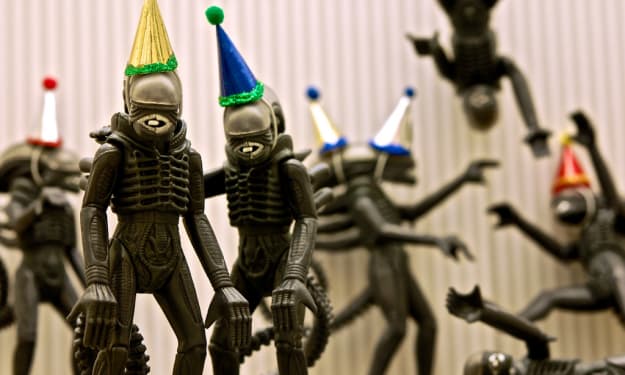
Aliens and Native Americans
Native Americans have many legends of UFOs and aliens or Star People, just as we can find in other places around the world. From flying ships in India called vimanas to the Nephilim of the Bible, stories of beings coming to Earth from the stars abound. Egyptian carvings show what look like helicopters and airplanes. When a metal model airplane found in ancient South American ruins is built to scale, it can actually fly. Erich Von Daniken wrote Chariots of the Gods in 1968 in which he explored the Nazca lines in Peru. The pictures the Nazca lines form are only visible from the air, yet how were they designed and created centuries before flight? How do we explain all of these stories and artifacts?
By Hyapatia Lee9 years ago in Futurism
Who Was Isaac Asimov?
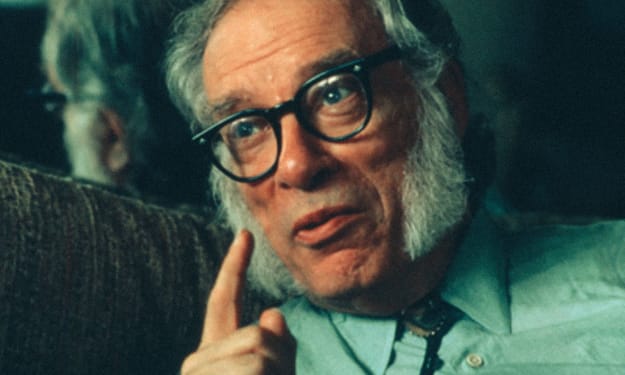
Isaac Asimov (1920-1992) is remembered as one of the top 3 science fiction writers, along with Robert Heinlein and Arthur C. Clarke. Asimov is widely considered to be the founder of modern science fiction, born near modern-day Smolensk to a family of poor Jewish millers in Soviet Russia during the Russian Civil War. His family immigrated to the U.S. when he was three years old to escape the chaos of the Russian Revolution.
By Stephanie Gladwell9 years ago in Futurism
A Tough Day For Skeptics
In the small fishing village of Shag Harbor, Nova Scotia, things were pretty simple and quiet for this modest Canadian province. But on October 4th of 1967, the village would host one of the most well documented UFO incidents of all time.
By Ryan Sprague9 years ago in Futurism
From Kuji to Solo
In a field wrought with speculation and educated (and sometimes not so educated) opinions, there is a small section that stands on its own two legs with both technological and legal credibility. This section is unofficially known as UFO hacking. The name, although seeming rather self-evident, is the detailed, and sometimes arduous task of hacking into government funded, and/or military-centered computer systems in order to uncover information pertaining to the official research or activity of the UFO phenomenon.
By Ryan Sprague9 years ago in Futurism
As You Know Bob - I Don’t Exist
As you know Bob, I don’t exist—but I am, for all intents and purposes, immortal. You must have wondered many times of course just what is meant by the word "self." Certainly there is conscious awareness, but where does that awareness stand? What is its platform? Personality, as we understand it, is a combination of memory and action—declarative memory of the sort that tells you that Paris is the capital of France and it is procedural memory that enables you to ride a bicycle. Personality though? Well then, think of a unit of memory and a single star and personality is a vast and dense constellation of memories in the galaxy of your brain. Stars are born, the age, they flare and they die and as they orbit the center; those constellations change their form and spread… and there can be many constellations in that neural galaxy.
By Brett Davidson9 years ago in Futurism
Irving Wallace Predictions of That Came True
Irving Wallace is a name from the past. If you are a Gen-X kid, you may have grown up in a world where every bathroom featured The Book of Lists, Wallace’s book (with kids Amy Wallace and David Wallechinsky—he had to take the old man’s Ellis Island name, huh?) that updated to The Guinness Book of World Records in the hip 70s. Why, just yesterday, before I wrote this article, I posted for friends Irving Wallace’s mind-blowing 1972 movie The Man, in which a fateful plane accident causes president pro tempore of the Senate James Earl Jones to become the President. A black President?! 1972 America’s collective mind is blown. Halfway between the Dr. Strangelove airplane and Darth Vader, JEJ is, of course, a magnificent voice and a majestic avatar of human dignity. Burgess Meredith—you know, Rocky’s trainer—plays the evil sculduggerous Southern teabagger who plots President Vader’s ruin.
By Matthew Wilder9 years ago in Futurism
Terence McKenna Unraveled Consciousness
An adamant critic of culture, Terence McKenna was a 20th century shaman that pioneered an in-depth analysis of one's consciousness and the lives we live. He birthed radical hypotheses about the development of the mind, posited "the stoned ape" hypothesis, and declared he had deciphered the nature of time using the I Ching. Mckenna held that individuality and social constructs were detrimental illusions to living a fulfilling life. He was called the "Timothy Leary of the 1990s," inspiring millions of people to question their reality.
By Stephanie Gladwell9 years ago in Futurism
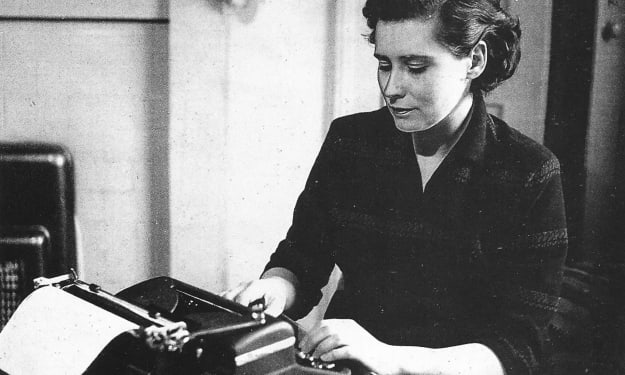
Science Fiction Feminist Dorris Lessing
Doris Lessing, made famous by her epic novel of the female experience, The Golden Notebook, was also a prolific writer of science fiction. She was not a fan of genre distinctions. She called science fiction "some of the best social fiction of our time," writing woozy, difficult books about psychic women and fallen paradises.
By Stephanie Gladwell9 years ago in Futurism
Surprising Science Fiction Stories from the Ancient World
Some think of Mary Shelley’s Frankenstein as the beginning of science fiction. Others would say that it didn’t really begin until H.G. Wells began writing down his marvelous, speculative stories in which he imagined terrible - and wonderful - possibilities for the futures. While these might be the beginnings of science fiction or speculative fiction as we define it today, there are many stories from the ancient world and early cultures all over the planet that contained elements of science and speculation similar to the ones we love today.Whether they’re early tales from Japan or surprising elements of the Bible, these stories will inspire you to take a closer look at what you consider the origins of your favorite genre.
By Sarah Quinn9 years ago in Futurism